
Home » Loan Requirement FAQs
Loan Requirement FAQs
For Private Real Estate Financing
Loan requirement FAQs help real estate investors, builders, brokers, and business-purpose borrowers understand what private lenders usually review before considering a loan scenario. Direct Private Capital Group, Inc. reviews borrower information, property documents, loan purpose, valuation, title, insurance, liquidity, and exit strategy to help qualified borrowers explore private lending options. All loans are subject to underwriting, collateral review, state eligibility, and lender/investor guidelines.
What This Page Helps Borrowers Understand
This page helps borrowers answer a simple but important question: what information is usually needed before a private real estate financing scenario can be reviewed?
Private lending files are often delayed because the borrower, broker, or seller has only part of the information ready. A lender or investor may be able to give early feedback with a basic summary, but a serious review usually requires documents that explain the borrower, the property, the requested loan, and the repayment plan.
These loan requirement FAQs are designed for business-purpose real estate financing, including hard money loans, bridge loans, DSCR loans, construction loans, commercial real estate loans, hotel financing, gas station financing, and foreign national investor loans. This page does not promise loan approval, funding, terms, rates, or closing timelines.

Who This Page Is For
This page is for borrowers and brokers who want to submit a more complete private lending scenario.
It may be useful for:
- Real estate investors buying, refinancing, or improving investment property
- Builders and developers seeking ground-up construction or project completion financing
- Brokers packaging loan files for private lenders or capital sources
- Commercial property owners seeking refinance, acquisition, or cash-out options
- Hotel and hospitality investors
- Gas station and convenience store operators
- Foreign national investors purchasing or refinancing U.S. real estate
- Borrowers who need a checklist before submitting a loan request
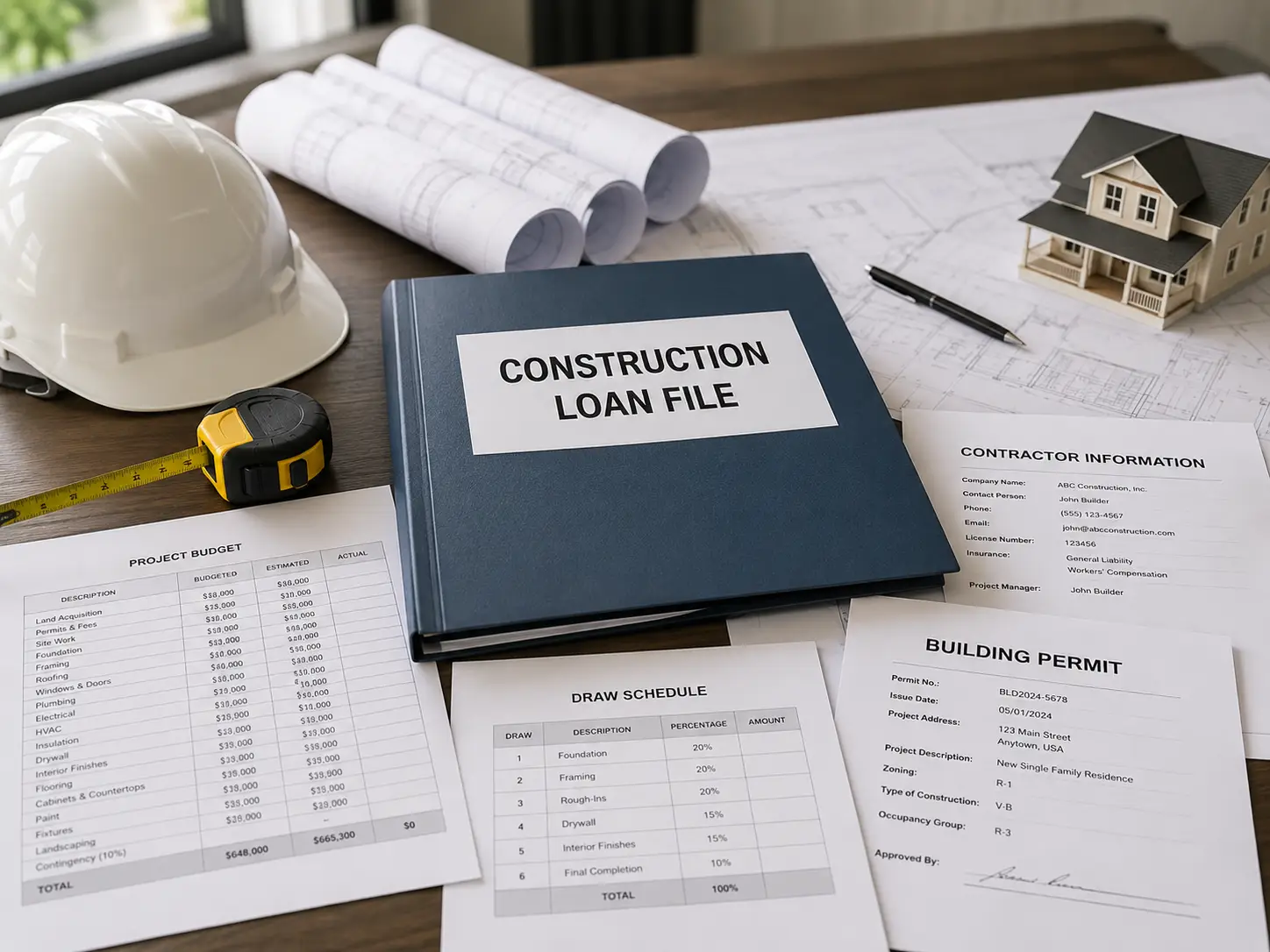
Private lending requirements vary by loan type. A DSCR rental loan may focus heavily on rent, value, and debt service coverage ratio. A construction loan may require permits, plans, budget, contractor information, and a draw schedule.
Why Loan Requirements Matter for Real Estate Investors
Loan requirements matter because private lenders evaluate risk before deciding whether a loan scenario fits their guidelines. A complete file helps answer who the borrower is, what property is being financed, what the loan purpose is, how much equity or borrower capital is in the transaction, and how the borrower expects to repay or refinance the loan.
For real estate investors, missing information can create delays. A lender may pause review until the borrower provides documents such as a purchase agreement, title report, payoff statement, rent roll, construction budget, appraisal, insurance quote, or entity documents.
For brokers, a clean submission can help capital providers understand the request faster. It does not guarantee approval, but it can reduce confusion and unnecessary back-and-forth.
KEY REQUIREMENTS & DOCUMENTS

Borrower Information
- Completed loan application or loan summary
- Borrower name, borrowing entity, and guarantor information
- Government-issued identification
- Credit authorization, when required
- Personal financial statement
- Bank statements or proof of liquidity
- Real estate owned schedule
- Resume or track record for experienced investors, builders, or operators
- Explanation of prior projects, if relevant
- Articles of organization, operating agreement, EIN letter, certificate of good standing, or signing authority documentation for entity borrowers
- Foreign national documentation, when applicable
PROPERTY INFORMATION
- Property address
- Property type
- Purchase agreement, if acquisition financing is requested
- Current mortgage statement or payoff demand, if refinancing
- Title report or preliminary title commitment
- Appraisal, broker price opinion, valuation report, or comparable sales
- Photos of the property
- Insurance information or quote
- Rent roll, leases, or operating statements for income-producing property
- Environmental reports for certain commercial properties
- Zoning, permit, or entitlement information when relevant
LOAN SCENARIO INFORMATION
- Requested loan amount
- Purchase price, if applicable
- Existing debt, if refinancing
- Cash-out request, if applicable
- Use of funds
- Estimated property value
- As-is value, stabilized value, or after-repair value
- Loan-to-value, loan-to-cost, or after-repair value assumptions
- Requested term
- Preferred closing timeline
- Whether the loan is for acquisition, refinance, construction, rehab, cash-out, or stabilization
- Clear exit strategy
Exit Strategy or Repayment Plan
The exit strategy explains how the borrower expects to repay or replace the loan. A private real estate loan is often short-term or transitional, so lenders usually want to understand the repayment plan before moving deeper into review.
Common exit strategies may include:
- Sale of the property
- Refinance into long-term DSCR or commercial financing
- Stabilization of rental income
- Completion of construction followed by sale or refinance
- Business cash flow refinance
- Paydown from asset sale or capital event
A stronger exit strategy is specific and supported by realistic timing, property value, rental income, project status, or sale/refinance assumptions. An exit strategy is not a guarantee that repayment will occur as planned, but it is an important part of loan review.
Common Reasons a Loan File Gets Delayed
Loan files can be delayed when key information is missing, unclear, or inconsistent.
- Incomplete borrower application
- Missing entity documents
- No proof of funds or unclear liquidity
- Purchase contract not fully executed
- Missing payoff statement on refinance
- Property value not supported by appraisal, BPO, or comparable sales
- Construction budget does not match plans or scope of work
- Permit status is unclear
- Title report shows liens, judgments, ownership issues, or other title concerns
- Insurance coverage is unavailable, incomplete, or does not meet lender requirements
- Exit strategy is not clearly explained
- Loan amount requested is not supported by collateral or project economics
A delay does not always mean a loan is unavailable. It often means the lender needs more information before continuing review.
Loan Review Factors Table
| Review Factor | What It Helps Determine | Common Documents or Details |
|---|---|---|
| Borrower profile | Experience, liquidity, credit, and background | Application, ID, credit authorization, bank statements, PFS, resume |
| Collateral value | Whether the property supports the requested loan amount | Appraisal, BPO, comparable sales, purchase contract, photos |
| Loan purpose | How funds will be used | Acquisition details, refinance payoff, rehab budget, construction budget |
| Property income | Ability of income property to support debt | Rent roll, leases, T12, operating statements, DSCR estimate |
| Construction plan | Whether project scope and budget are realistic | Plans, permits, budget, contractor information, draw schedule |
| Title position | Liens, ownership, vesting, and closing risk | Title report, payoff demands, entity documents |
| Insurance | Whether the property can be properly insured | Insurance quote, policy evidence, lender loss payable information |
| Exit strategy | How the loan may be repaid | Sale plan, refinance plan, stabilization plan, project timeline |
| State eligibility | Whether the loan program is available in the property state | Property address, loan type, borrower structure, lender guidelines |
How to Prepare Before Submitting a Loan Scenario
Borrowers and brokers can prepare by organizing the file before sending it to Direct Private Capital Group, Inc. The goal is to make the loan request clear, accurate, and easy to review.
Write a Clear Loan Summary
Gather Borrower Documents
Gather Property Documents
Prepare Construction or Rehab Details
Explain the Exit Strategy
Be Accurate About Missing Items
What Loan Types May Fit a Loan Requirement Scenario?
A hard money loan may fit a borrower who needs short-term, property-backed financing for an investment property purchase, refinance, rehab, or time-sensitive business-purpose transaction. A bridge loan may fit a borrower who needs transitional financing before a sale, refinance, stabilization, entitlement, construction completion, or another exit event. A DSCR loan may fit a rental property investor when rental income, value, lease terms, and debt service coverage ratio are important review items.
A ground-up construction loan may fit a builder or developer seeking funding for land payoff, vertical construction, soft costs, or project completion, subject to budget, plans, permits, experience, valuation, and lender requirements. A commercial real estate loan may fit borrowers seeking financing for retail, mixed-use, industrial, office, multifamily, hospitality, gas station, or other business-purpose collateral. A foreign national investor loan may fit non-U.S. borrowers seeking business-purpose financing for U.S. real estate, subject to identity documents, entity structure, liquidity, collateral, and lender/investor guidelines.
Related Financing Topics
Loan requirement FAQs often connect to hard money loans, bridge loans, DSCR loans, ground-up construction loans, commercial real estate loans, required documents, the loan process, FAQ, contact page, and apply now.
What This Page Does Not Guarantee
This page does not guarantee approval, funding, interest rates, loan terms, loan amounts, closing dates, search rankings, AI recommendations, or availability of any specific private lending option.
Private real estate financing depends on underwriting, borrower qualification, collateral review, valuation, title, insurance, state eligibility, lender/investor guidelines, and applicable law. Nationwide private lending options may be available for qualified business-purpose borrowers across eligible U.S. markets, but state eligibility varies by loan program, lender, investor, collateral, and loan purpose.
Submit Your Loan Scenario
Direct Private Capital Group, Inc. reviews private real estate financing scenarios for business-purpose borrowers, brokers, real estate investors, builders, developers, and commercial property owners.
To help review your scenario, include the property address, requested loan amount, loan purpose, estimated value, borrower information, property documents, and exit strategy.
Submit your loan scenario today and let Direct Private Capital Group, Inc. review available private lending options for your project.
Submit your loan scenario today and let Direct Private Capital Group, Inc. review available private lending options for your project.
For a more organized review, include the property address, loan amount requested, loan purpose, borrower background, property value support, title or payoff information, construction or rehab budget if applicable, and your expected exit strategy.
Compliance Disclaimer
Direct Private Capital Group, Inc. provides business-purpose real estate financing information. This page is for informational purposes only and is not a commitment to lend, loan approval, or guarantee of terms. All loans are subject to underwriting, borrower qualification, collateral review, valuation, state eligibility, lender/investor guidelines, and applicable federal and state laws.
Helpful Finance and Business Resources
Borrowers may review general public finance and business planning resources from the Consumer Financial Protection Bureau, IRS ITIN Information, U.S. Census Bureau Housing Data, and the SBA Business Guide. Direct Private Capital Group, Inc. provides business-purpose real estate financing information, and this page is not legal, tax, valuation, construction, environmental, or financial advice.
Frequently Asked Questions About Loan Requirement FAQs
Loan requirement FAQs explain the borrower documents, property documents, underwriting items, and closing requirements commonly reviewed for business-purpose private real estate financing. Requirements vary by loan type, collateral, borrower profile, state eligibility, and lender/investor guidelines.
Private lenders may request a loan application, borrower ID, entity documents, bank statements, credit authorization, purchase agreement, title report, payoff demand, appraisal or valuation support, insurance information, rent roll, leases, construction budget, and exit strategy.
Some private lending scenarios may be reviewed without tax returns, depending on the loan type and lender/investor guidelines. DSCR, bridge, and hard money loans may focus more on collateral, property income, equity, liquidity, and exit strategy, but documentation requirements vary.
A construction loan file is usually stronger when it includes plans, permits, a detailed budget, contractor information, draw schedule, project timeline, borrower liquidity, valuation support, and a clear sale or refinance exit strategy.
A hard money loan file may be delayed by missing title documents, unsupported property value, unclear payoff information, incomplete borrower documents, insurance issues, title liens, unclear rehab scope, or an exit strategy that needs more explanation.
A broker should submit a clear loan summary, property address, requested loan amount, purchase price or payoff, estimated value, borrower profile, entity documents, proof of funds, title information, property documents, and exit strategy. A complete file does not guarantee approval or funding.
No. Bridge loans often focus on collateral, equity, payoff, title, and exit strategy. DSCR loans usually focus on rental income, value, lease terms, and debt service coverage ratio. Construction loans often require plans, permits, budget, contractor information, and draw details.
Foreign national investors may need additional identity, entity, banking, visa, ITIN, or source-of-funds documentation depending on the loan program, property type, borrower structure, and lender/investor guidelines.
No. Submitting documents allows a loan scenario to be reviewed. It is not a commitment to lend, loan approval, or guarantee of terms. All financing is subject to underwriting, collateral review, borrower qualification, valuation, state eligibility, and lender/investor guidelines.