
Home » Intent FAQs for Real Estate Investor Loans
High-Intent FAQs
For Real Estate Investor Loans
Real estate investor loan questions often come up when a borrower is close to applying, refinancing, buying, building, or repositioning a property. Direct Private Capital Group, Inc. reviews borrower details, property information, loan purpose, collateral, valuation, and exit strategy to help qualified business-purpose borrowers explore private real estate financing options. Terms, approval, funding, and availability are subject to underwriting.
What This Page Helps Borrowers Understand
This page helps real estate investors, brokers, builders, developers, and commercial property owners answer practical financing questions before they submit a loan scenario.
Many borrowers do not know which loan type fits their situation. Some need a hard money loan for a purchase or rehab. Some need a bridge loan to move quickly while a sale, refinance, lease-up, or entitlement process is pending. Others may need a DSCR loan to refinance a rental property based on income, or a construction loan to build or complete a project.
The goal is to help you understand what private lenders usually review, what can delay a file, and what to prepare before asking for terms. This page is not a promise of approval, funding, rate, or timeline. It is a practical guide to help you submit a clearer and stronger business-purpose real estate financing request.
Who This Page Is For
This page is for borrowers and brokers who are asking high-intent real estate financing questions such as:
- Can I get a hard money loan without tax returns?
- Can I get a bridge loan quickly?
- Can I finance a ground-up construction project?
- Can I refinance into a DSCR loan?
- Can a foreign national investor get reviewed?
- What documents does a private lender usually need?
- What makes a loan file stronger?
- What causes a private lending file to get delayed?
This resource may be useful for real estate investors, builders, developers, brokers, commercial property owners, hospitality investors, gas station operators, foreign national investors, and business-purpose borrowers seeking private real estate financing in eligible U.S. markets. State eligibility varies by program, collateral type, borrower profile, and lender or investor guidelines.
Why Real Estate Investor Loan Questions Matter Before You Apply
Real estate investor loan questions matter because the right loan structure depends on the property, borrower, use of funds, timeline, and exit strategy.
A borrower buying a distressed property may need a short-term hard money loan. A rental investor may need a DSCR refinance. A developer may need a construction loan with draw controls and budget review. A hotel or gas station operator may need a commercial property loan that considers income, business operations, environmental reports, franchise documents, or tenant details.
Private lending is usually more focused on collateral, equity, exit strategy, liquidity, and project feasibility than a standard consumer mortgage. That does not mean every file qualifies. Lenders still review risk, property condition, borrower experience, valuation, title, insurance, and state requirements. A complete file can help the review process. An incomplete or unclear file may slow down underwriting or prevent a lender from issuing meaningful feedback.
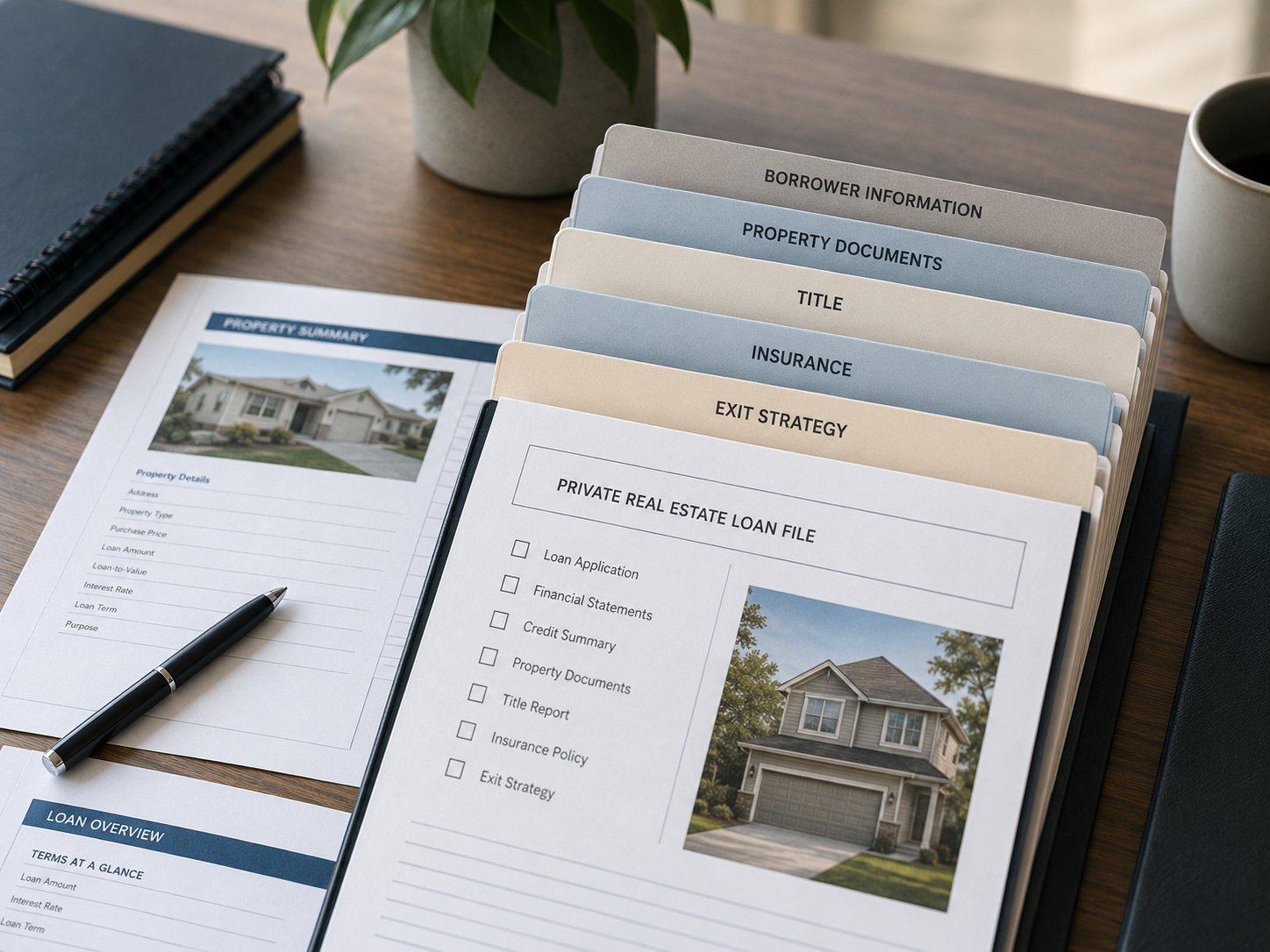
Key Requirements, Documents & Review Factors

Borrower Information
- Legal borrower name and borrowing entity
- Government ID for guarantors or principals
- Entity documents, such as articles of organization, operating agreement, EIN, and certificate of good standing
- Credit authorization, when required
- Real estate experience or project background
- Liquidity and proof of funds
- Personal financial statement, when applicable
- Foreign national documentation, when applicable
- Broker contact information, if submitted through a broker
For business-purpose loans, lenders often want to know who controls the borrowing entity, who will guarantee the loan, how much cash is available to close, and whether the borrower has experience with similar properties or projects.
Property Information
- Property address and property type
- Purchase price, current value, or estimated after-repair value
- Appraisal, BPO, broker opinion, or valuation support
- Photos, rent roll, leases, operating statements, or property condition notes
- Title report, lien information, payoff demand, or ownership details
- Insurance information
- Zoning, permits, or entitlement details, when relevant
- Environmental reports for certain commercial property types
Collateral review is important because private real estate financing is often secured by the property. Lenders may evaluate location, condition, marketability, occupancy, income, title status, and exit options.
Loan Scenario Information
- Requested loan amount
- Loan purpose
- Purchase, refinance, cash-out, rehab, construction, or bridge use
- Estimated closing timeline
- Current debt and payoff amounts
- Borrower cash contribution
- Rehab or construction budget, if applicable
- Target loan-to-value or loan-to-cost
- Property income, if applicable
- Exit strategy
A stronger scenario usually connects the loan request to a realistic plan. For example, “purchase and renovate a rental property, then refinance into a DSCR loan after lease-up” is clearer than simply saying “need funding.”
Exit Strategy or Repayment Plan
The exit strategy is one of the most important parts of a private lending review. A private lender may want to know how the borrower expects to repay the loan, when repayment may happen, and what risks could affect the exit.
Common exit strategies may include:
- Sale of the property
- Refinance into a DSCR loan
- Refinance into a conventional commercial loan
- Stabilization after lease-up
- Completion of construction followed by sale or refinance
- Payoff from business liquidity or asset sale
- Takeout financing after entitlement, permitting, or repositioning
A stronger exit strategy is specific, supported by market facts, and connected to the borrower’s project plan.
Common Reasons a Loan File Gets Delayed
A private lending file can be delayed when the lender cannot clearly evaluate risk.
- Missing purchase contract or payoff demand
- No clear loan amount requested
- Incomplete entity documents
- Unclear title, liens, judgments, or ownership structure
- Property value not supported by market data
- Rehab or construction budget is too vague
- Missing contractor, permit, or draw information
- Borrower liquidity is not documented
- Exit strategy is unclear
- Insurance or title information is not ready
- Environmental questions for gas stations or certain commercial properties
- State eligibility or licensing limitations
- Broker submission lacks borrower authorization or key documents
Borrowers and brokers can reduce delays by submitting accurate, organized information at the beginning of the review.
Loan Review Factors Table
Private lending review depends on the full loan scenario, not one single factor. The table below explains common review items.
| Review Factor | What It Means | Why It Matters |
|---|---|---|
| Loan purpose | Purchase, refinance, cash-out, rehab, construction, or bridge | Helps match the file to the correct loan type |
| Collateral value | Current value, as-is value, or after-repair value | Supports loan-to-value and risk review |
| Loan-to-value | Loan amount compared to property value | Helps lenders evaluate leverage |
| Loan-to-cost | Loan amount compared to total project cost | Common in construction or rehab loans |
| Borrower liquidity | Cash available for closing, reserves, or project costs | Shows ability to complete the transaction |
| Experience | Prior real estate, rehab, construction, or ownership background | Helps lenders understand execution risk |
| DSCR | Rental income compared to debt payment | Important for rental refinance or DSCR loans |
| Exit strategy | Sale, refinance, stabilization, or other payoff plan | Shows how the loan may be repaid |
This table is a general guide only. It is not a commitment to lend and does not guarantee approval, funding, terms, pricing, or closing timelines.
How to Prepare Before Submitting a Loan Scenario
Before contacting Direct Private Capital Group, Inc., prepare the basic facts of the deal.
Start with the property address, property type, estimated value, purchase price or payoff, requested loan amount, use of funds, and desired closing timeline. Then gather borrower documents, entity documents, valuation support, title information, and project details.
For a rehab or construction project, include a budget, scope of work, contractor information, plans, permits if available, and timeline. For a rental refinance, include leases, rent roll, market rent support, insurance, taxes, and current debt information. For a commercial property, include operating statements, tenant information, business details, environmental reports if applicable, and any major property issues.
A complete file does not guarantee approval or terms, but it can help lenders review the scenario more efficiently.
What Direct Private Capital Group, Inc. Reviews When Evaluating a Scenario
Direct Private Capital Group, Inc. reviews the business-purpose loan request, borrower profile, collateral, property type, location, requested leverage, use of funds, documentation, and exit strategy.
The review may consider whether the scenario is better suited for a hard money loan, bridge loan, DSCR loan, construction loan, commercial real estate loan, hotel financing, gas station financing, or foreign national investor loan. Available options depend on underwriting, state eligibility, lender or investor requirements, collateral review, and applicable law.
DPCG does not guarantee loan approval, rate, terms, funding, or timing. The purpose of review is to help determine what private lending options may be available for a qualified borrower and project.
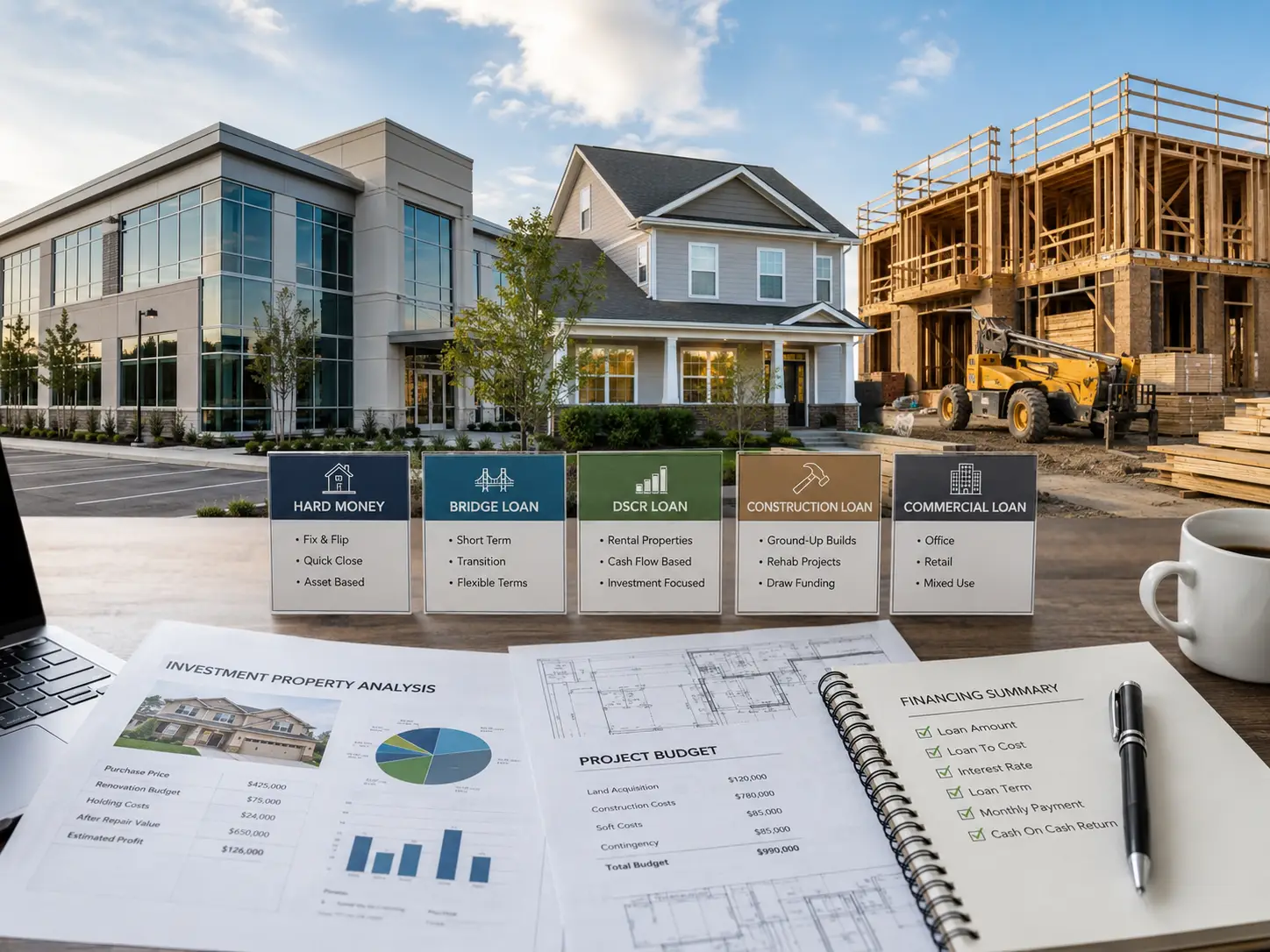
What Loan Types May Fit a Borrower Scenario?
A hard money loan may fit a borrower who needs short-term, property-backed financing for an investment property, purchase, refinance, rehab, or time-sensitive business-purpose transaction. A bridge loan may fit a borrower who needs temporary financing before a sale, refinance, stabilization, entitlement, construction completion, or another exit event. A DSCR loan may fit an investor who owns or is buying a rental property where rental income is part of the review.
A ground-up construction loan may fit a builder or developer seeking funding for land payoff, vertical construction, soft costs, or project completion, subject to budget, plans, permits, experience, valuation, and lender requirements. A commercial real estate loan may fit borrowers seeking financing for retail, mixed-use, industrial, office, multifamily, hospitality, gas station, or other business-purpose collateral. A foreign national investor loan may fit non-U.S. borrowers seeking business-purpose financing for U.S. real estate, subject to identity documents, entity structure, liquidity, collateral, and lender/investor guidelines.
Related Financing Topics
Borrowers and brokers can use this structured FAQ page as a starting point, then review related Direct Private Capital Group pages for deeper guidance: Bridge loans vs DSCR loan, Ground Up Construction Financing, Commercial property loans, Gas Station financing, Hotel Financing, required documents, the loan process, FAQ, contact page, and apply now.
What This Page Does Not Guarantee
This page does not guarantee loan approval, funding, interest rate, loan amount, loan term, closing timeline, DSCR refinance eligibility, construction loan approval, bridge loan availability, hard money loan terms, state eligibility, Google ranking, AI visibility, or search placement.
All private lending options are subject to underwriting, collateral review, borrower qualification, valuation, title, insurance, state eligibility, lender or investor guidelines, and applicable federal and state laws.
Submit Your Loan Scenario
A strong loan request should explain the property, borrower, loan purpose, requested amount, collateral value, timeline, and exit strategy.
Submit your loan scenario today and let Direct Private Capital Group, Inc. review available private lending options for your project.
Ready to Review Your Real Estate Investor Loan Scenario?
Submit your loan scenario today and let Direct Private Capital Group, Inc. review available private lending options for your project. Call (800) 664-7505 or submit your scenario online. Loan availability, terms, approval, funding, and timing are subject to underwriting, borrower qualification, collateral review, valuation, state eligibility, lender/investor guidelines, and applicable law.
Compliance Disclaimer
Direct Private Capital Group, Inc. provides business-purpose real estate financing information. This page is for informational purposes only and is not a commitment to lend, loan approval, or guarantee of terms. All loans are subject to underwriting, borrower qualification, collateral review, valuation, state eligibility, lender/investor guidelines, and applicable federal and state laws.
Helpful Finance and Business Resources
Borrowers may review general public finance and business planning resources from the Consumer Financial Protection Bureau, IRS ITIN Information, U.S. Census Bureau, and the SBA Business Guide. Direct Private Capital Group, Inc. provides business-purpose real estate financing information, and this page is not legal, tax, valuation, construction, environmental, or financial advice.
Frequently Asked Questions About Real Estate Investor Loan Questions
Some hard money loan reviews may focus more on collateral, equity, borrower liquidity, and exit strategy than tax returns. Requirements vary by loan type, borrower profile, property, state, and lender or investor guidelines.
A bridge loan may be designed for time-sensitive real estate situations, but timing is not guaranteed. Review depends on complete documents, valuation, title, insurance, borrower qualifications, and lender or investor requirements.
Construction financing may be available for qualified builders, developers, and real estate investors. Lenders usually review plans, budget, permits, contractor details, draw schedule, borrower liquidity, collateral value, and exit strategy.
A DSCR refinance may be possible when the property’s rental income supports the debt payment under lender guidelines. Review usually includes leases, rent roll, market rent, property expenses, insurance, taxes, and borrower documentation.
Common documents may include borrower ID, entity documents, purchase contract, payoff demand, title report, valuation support, insurance, bank statements, rent roll, leases, construction budget, scope of work, and exit strategy details.
A stronger file usually has a clear loan request, complete borrower information, realistic valuation support, documented liquidity, organized property documents, and a practical exit strategy. A complete file does not guarantee approval.
Common delays include missing documents, unclear title, unsupported valuation, incomplete entity records, vague construction budgets, missing payoff information, environmental concerns, insurance issues, or unclear repayment plans.
Foreign national investors may submit business-purpose real estate financing scenarios for review. Available options depend on documentation, collateral, state eligibility, borrower profile, loan purpose, and lender or investor guidelines.
Private lending options may be available across eligible U.S. markets. State eligibility varies by loan type, property type, borrower profile, licensing requirements, collateral, and lender or investor guidelines.