
Commercial Property
Loans for Investors
Commercial property loans for investors help real estate owners, developers, brokers, and business-purpose borrowers explore financing options for income-producing and investment properties. Direct Private Capital Group, Inc. reviews property type, borrower profile, collateral, valuation, loan purpose, exit strategy, and lender/investor guidelines to help qualified borrowers explore available private lending options. All terms are subject to underwriting.
What This Page Helps Borrowers Understand
Commercial property financing can be complex because every property type, loan purpose, and borrower profile is reviewed differently. A loan request for a mixed-use building, retail center, industrial warehouse, hotel, gas station, or multifamily asset may require different documents and underwriting questions.
This page helps borrowers, brokers, developers, and real estate investors understand how private commercial property loans may be reviewed, what information is usually needed, what can delay review, and how to prepare a stronger loan scenario.
A commercial property loan may be used for acquisition, refinance, cash-out, bridge financing, construction, renovation, stabilization, or investment repositioning. Available options depend on the property, borrower profile, loan purpose, state eligibility, valuation, title, and lender/investor guidelines.

Who This Page Is For
This resource is designed for real estate investors, builders, developers, brokers, foreign national investors, commercial property owners, hospitality investors, gas station operators, and business-purpose borrowers seeking private real estate financing in the United States.
It may be useful when a borrower needs financing for mixed-use buildings, retail centers, office properties, industrial assets, warehouses, multifamily properties, hotels, motels, gas stations, automotive properties, medical buildings, or special-use commercial real estate.
Commercial property loan scenarios may connect to hard money loans, bridge loans, DSCR loans, construction loans, hotel financing, gas station financing, and foreign national investor loans.

What Lenders Usually Review
Commercial property loan review usually considers property type, collateral value, income, occupancy, loan-to-value, loan-to-cost, after-repair value, borrower liquidity, entity documents, title condition, insurance, business-purpose use of funds, credit profile, and exit strategy. Requirements vary by loan type, state, property type, and lender/investor guidelines.
What Can Delay Review
Common delays include missing rent rolls, unclear ownership, incomplete entity documents, unsupported valuation, unresolved title issues, missing payoff statements, environmental concerns, incomplete construction budgets, missing insurance, unclear exit strategy, or loan requests that exceed available collateral support.
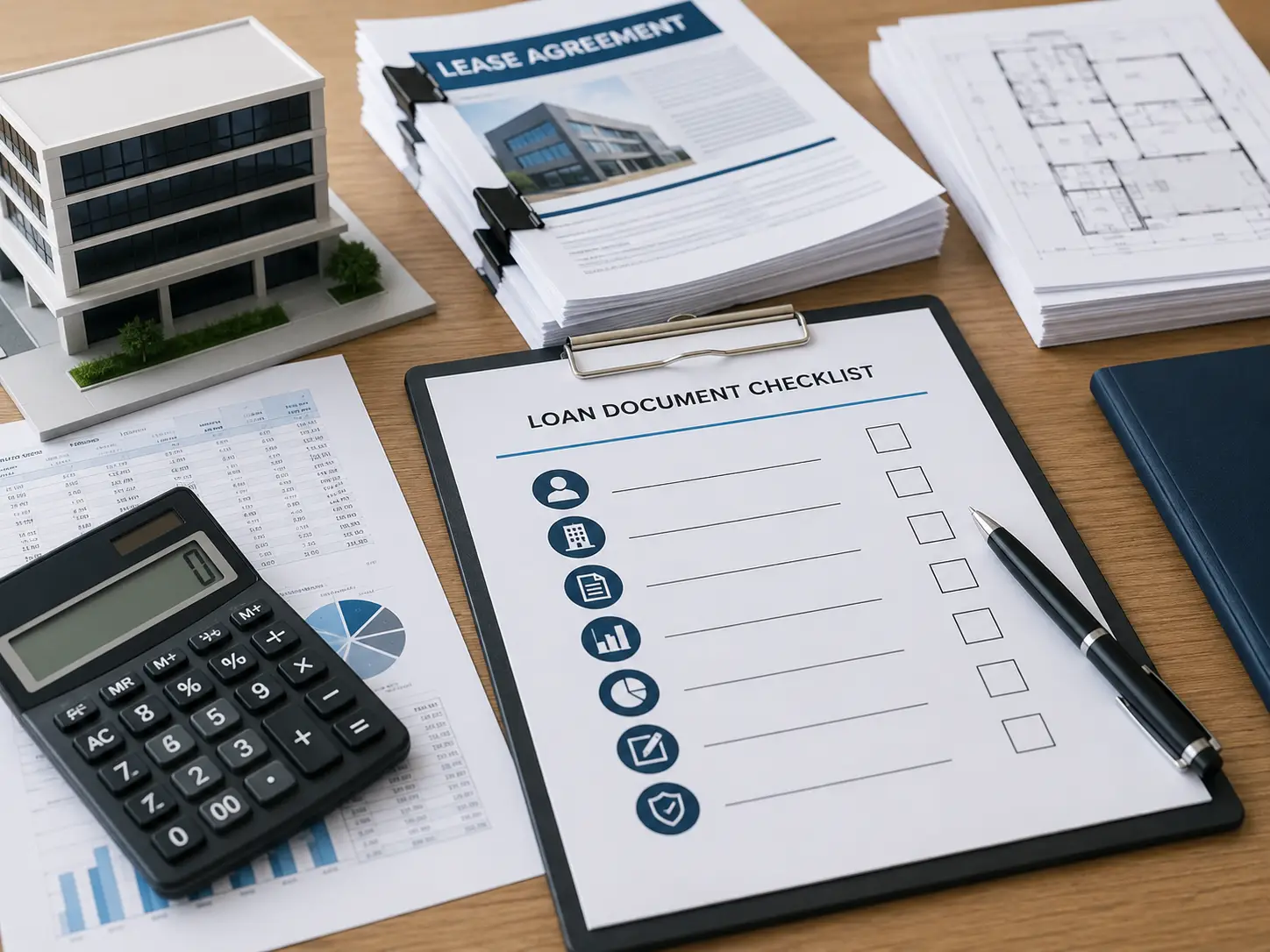
COMMERCIAL LOAN DOCUMENTS COMMONLY REQUESTED
BORROWER INFORMATION
- Borrower legal name, contact information, and borrowing entity
- Ownership structure, signing authority, and entity documents
- Government ID, credit profile, real estate experience, and background
- Liquidity support, reserves, bank statements, or proof of funds
PROPERTY INFORMATION
- Property address, property type, size, condition, and current use
- Purchase contract, payoff statement, rent roll, leases, or operating statements
- Appraisal, BPO, comparable sales, income support, or valuation notes
- Title report, insurance, tax records, photos, zoning, and environmental items when applicable
LOAN SCENARIO
- Requested loan amount, lien position, loan purpose, and use of proceeds
- Purchase price, current value, total project cost, LTV, LTC, and ARV when applicable
- Construction or renovation budget, plans, permits, contractor details, and timeline when applicable
- Exit strategy, repayment plan, requested term, and target closing timeline
Permit, zoning, and property-use note: For construction, renovation, redevelopment, or change-of-use projects, borrowers should confirm whether permits, zoning approvals, environmental reports, or local building requirements apply to the property. Borrowers may also review official state or local building department resources through USA.gov state government directories to locate permit, zoning, and building department information. Loan review remains subject to underwriting, collateral review, state eligibility, and lender/investor guidelines.
COMMERCIAL PROPERTY LOAN REVIEW PROCESS
A clear submission helps Direct Private Capital Group, Inc. review whether available private lending options may fit the borrower, collateral, property type, state, loan purpose, and lender/investor guidelines.
FROM SCENARIO SUBMISSION TO FUNDING CONSIDERATION
Preliminary review of borrower, property type, collateral, loan purpose, and equity position
Submit requested documents for underwriting, valuation, title, and collateral review
Closing conditions, title, insurance, and funding consideration
Why Commercial Property Loans Matter for Real Estate Investors
Commercial property loans can help investors acquire, refinance, improve, or reposition real estate used for business or investment purposes. For many investors, timing and structure matter. A borrower may need to close on a property before a bank can complete a full review. A developer may need capital for improvements before the property is stabilized. A property owner may need a short-term bridge loan while preparing for permanent financing. Private commercial property loans may be designed for situations where collateral strength, equity, income potential, borrower experience, or exit strategy are important factors. However, private lending is not guaranteed. Each request must be reviewed based on the full file. Commercial financing may apply to mixed-use buildings, retail centers, office buildings, industrial properties, warehouses, multifamily properties, hotels, motels, gas stations, convenience stores, automotive properties, medical buildings, and special-use commercial properties.What Commercial Property Loan Review Does and Does Not Mean
A commercial loan review helps identify whether a private lending option may fit the borrower, property, and loan purpose. It does not mean the loan is approved, funded, or guaranteed.It May Include
- Review of collateral value and loan-to-value
- Review of rent roll, leases, or operating history
- Review of borrower experience and liquidity
- Bridge, DSCR, construction, or hard money loan options
- Business-purpose use of funds
- Title, insurance, valuation, and entity document review
- State and lender/investor eligibility review
It Does Not Mean
- No underwriting
- No collateral review
- No valuation review
- No title review
- Guaranteed approval
- Guaranteed funding
- Guaranteed rate or term
- Approval for every property type
- Eligibility in every state
- Commitment to lend
Key Requirements, Documents, and Review Factors
Borrower Information Usually Reviewed
- Borrower name and contact information
- Borrowing entity name and ownership structure
- Entity documents, operating agreement, articles, EIN, and good standing when applicable
- Government-issued identification
- Credit profile
- Real estate ownership or commercial property experience
- Liquidity, reserves, or proof of funds
- Business-purpose loan explanation
- Foreign national documentation, when applicable
Property Information Usually Reviewed
- Property address and property type
- Current use, occupancy, and condition
- Purchase price, current value, or payoff amount
- Rent roll, leases, operating statements, or income support
- Appraisal, broker price opinion, comparable sales, or valuation support
- Title report, payoff statements, liens, and ownership support
- Insurance information
- Photos, zoning, permits, or environmental reports when relevant
- Construction or renovation scope when applicable
Loan Scenario Information Usually Reviewed
- Requested loan amount and lien position
- Purchase, refinance, cash-out, bridge, construction, or renovation purpose
- Estimated loan-to-value
- Estimated loan-to-cost
- Estimated after-repair value, if applicable
- Use of proceeds
- Requested loan term
- Expected closing timeline
- Exit strategy
Exit Strategy or Repayment Plan
Exit strategy is a critical part of commercial property loan review. Since many private loans are short-term or transitional, lenders usually want to understand how the loan will be repaid.
- Sale of the property
- Refinance into long-term commercial debt
- DSCR refinance after stabilization
- Construction completion and permanent financing
- Lease-up and refinance after occupancy improves
- Business revenue or investment capital
- Payoff from another transaction
Loan Review Factors Table
| Review Factor | Why It Matters | What Borrowers Should Prepare |
|---|---|---|
| Property type | Different commercial assets have different guidelines | Property description, photos, current use, and occupancy details |
| Collateral value | Helps determine possible loan-to-value | Appraisal, BPO, comparable sales, purchase contract, income support |
| Income and occupancy | Shows property performance and potential DSCR support | Rent roll, leases, T12, YTD operating statements |
| Loan purpose | Confirms whether the request is business-purpose and how funds will be used | Written use of funds and project summary |
| Borrower experience | Helps evaluate ability to manage the asset or project | Real estate resume, ownership history, completed projects |
| Liquidity | Shows ability to cover costs, reserves, and project needs | Bank statements or proof of funds |
| Title condition | Confirms lien position and ownership | Preliminary title, payoff demands, entity documents |
| Exit strategy | Explains how the loan is expected to be repaid | Sale plan, refinance plan, lease-up plan, construction timeline |
| State eligibility | Programs vary by state and lender/investor requirements | Property address, borrower structure, and loan purpose |
Common Reasons a Commercial Loan File Gets Delayed
- Missing property address or property type
- No clear loan amount requested
- Unclear purchase, refinance, cash-out, bridge, or construction purpose
- Incomplete entity documents
- Missing rent roll, leases, or operating statements
- Unsupported collateral value
- Title issues, unresolved liens, or unclear ownership
- No insurance plan
- Environmental concerns for gas stations, industrial, or special-use properties
- Incomplete construction or renovation budget
- No realistic exit strategy
- Unclear borrower liquidity
- State or property type not eligible under investor guidelines
- Loan request exceeds available collateral support
How to Prepare Before Submitting a Loan Scenario
Before contacting Direct Private Capital Group, Inc., borrowers should gather the information needed to help private lenders evaluate the request.
Prepare a Short Loan Summary
- Who is borrowing
- What property is being financed
- How much financing is requested
- What the funds will be used for
- What the estimated value is
- What liens are currently on title
- What income or occupancy support exists
- How the loan will be repaid
- When the borrower wants to close
- What documents are already available
Business planning note: Commercial property borrowers who operate a business from the property or are preparing a business-purpose real estate project may review general business planning resources from the U.S. Small Business Administration. SBA resources are for general business education only and do not determine private loan eligibility.
Prepare Collateral Support
- Appraisal, BPO, or comparable sales
- Purchase contract or payoff statement
- Rent roll, leases, and operating statements
- Photos and property condition notes
- Construction budget or rehab scope, if applicable
- Title report and insurance information
Loan Types That May Fit a Commercial Property Scenario
Commercial Bridge Loans
Bridge loans may help investors purchase, refinance, or reposition commercial property when timing, collateral, or stabilization does not fit traditional lending.
DSCR Loans
DSCR loans may be useful when income from the property is reviewed to support repayment capacity. DSCR requirements vary by lender and property type.
Construction or Ground-Up Construction Loans
Construction financing may be considered when the borrower has land, plans, budget, permits, experience, and a clear exit strategy.
Hard Money Loans
Hard money loans may be considered for short-term, collateral-based commercial financing when the request is business-purpose and supported by property value, equity, and repayment plan.
Foreign National Investor Loans
Foreign national investors may be reviewed for certain U.S. commercial investment properties when identity, liquidity, entity structure, collateral, and exit strategy can be documented.
Related Financing Topics
Commercial Property loans may connects to Required Documents, Commercial Property Loans, Loan Process, Bridge Loan vs DSCR, Commercial Construction Loan Process, Construction Loan Process, Hotel Financing, FAQ, contact page, and apply now.
What This Page Does Not Guarantee
This page is educational. It does not guarantee that a borrower will qualify for financing. Direct Private Capital Group, Inc. does not guarantee loan approval, funding, terms, rates, timelines, loan amounts, search rankings, AI recommendations, or investor interest.
Loan availability may depend on borrower qualifications, credit profile, liquidity, collateral value, property type, loan purpose, loan amount, lien position, title condition, insurance availability, environmental review, state eligibility, exit strategy, lender/investor guidelines, and applicable federal and state laws.
Compliance Disclaimer
Direct Private Capital Group, Inc. provides business-purpose real estate financing information. This page is for informational purposes only and is not a commitment to lend, loan approval, or guarantee of terms. All loans are subject to underwriting, borrower qualification, collateral review, valuation, state eligibility, lender/investor guidelines, and applicable federal and state laws.
Helpful Financial Education Resource
Borrowers who want general financial education may review public resources from the Consumer Financial Protection Bureau. Borrowers researching local market conditions may also review public data from the U.S. Census Bureau. External resources are for general education only and do not determine loan eligibility.
Frequently Asked Questions About Commercial Property Loans for Investors
Commercial property loans for investors are business-purpose real estate loans used to purchase, refinance, improve, or reposition investment and income-producing commercial properties. Loan availability depends on underwriting, collateral, borrower qualifications, property type, and lender/investor guidelines.
Commercial property loans may be reviewed for mixed-use, retail, office, industrial, multifamily, hospitality, automotive, gas station, warehouse, and special-use properties. Eligibility varies by state, property condition, loan purpose, and investor requirements.
Private commercial property loans may be used for cash-out refinance scenarios when collateral, equity position, borrower profile, title, valuation, and use of proceeds meet underwriting and investor guidelines.
Common documents include a loan application, borrower ID, entity documents, purchase contract or payoff statement, rent roll, leases, property photos, valuation support, insurance information, and an exit strategy. Construction or renovation loans may require budgets, plans, permits, and contractor information.
Some private commercial property loan scenarios may be reviewed without relying primarily on tax returns. However, lenders may still request financial information, bank statements, rent rolls, operating statements, liquidity documentation, or other support depending on the loan type and property.
Common delays include missing documents, unclear ownership, title issues, unsupported property value, incomplete rent rolls, environmental concerns, unclear exit strategy, insufficient liquidity support, or conflicting information in the loan package.
Commercial bridge loans may be considered for certain unstabilized properties when the borrower has sufficient equity, a credible business plan, supporting documentation, and a realistic exit strategy. Approval and terms are subject to underwriting.
Yes. State eligibility varies by loan program, property type, borrower structure, licensing requirements, lender/investor guidelines, and applicable laws. Nationwide private lending options may be available across eligible U.S. markets.
No. Submitting a loan scenario is not a commitment to lend, loan approval, or guarantee of terms. All loan requests are subject to underwriting, collateral review, borrower qualification, valuation, state eligibility, and investor guidelines.