
Medical Office Building Bridge Loans
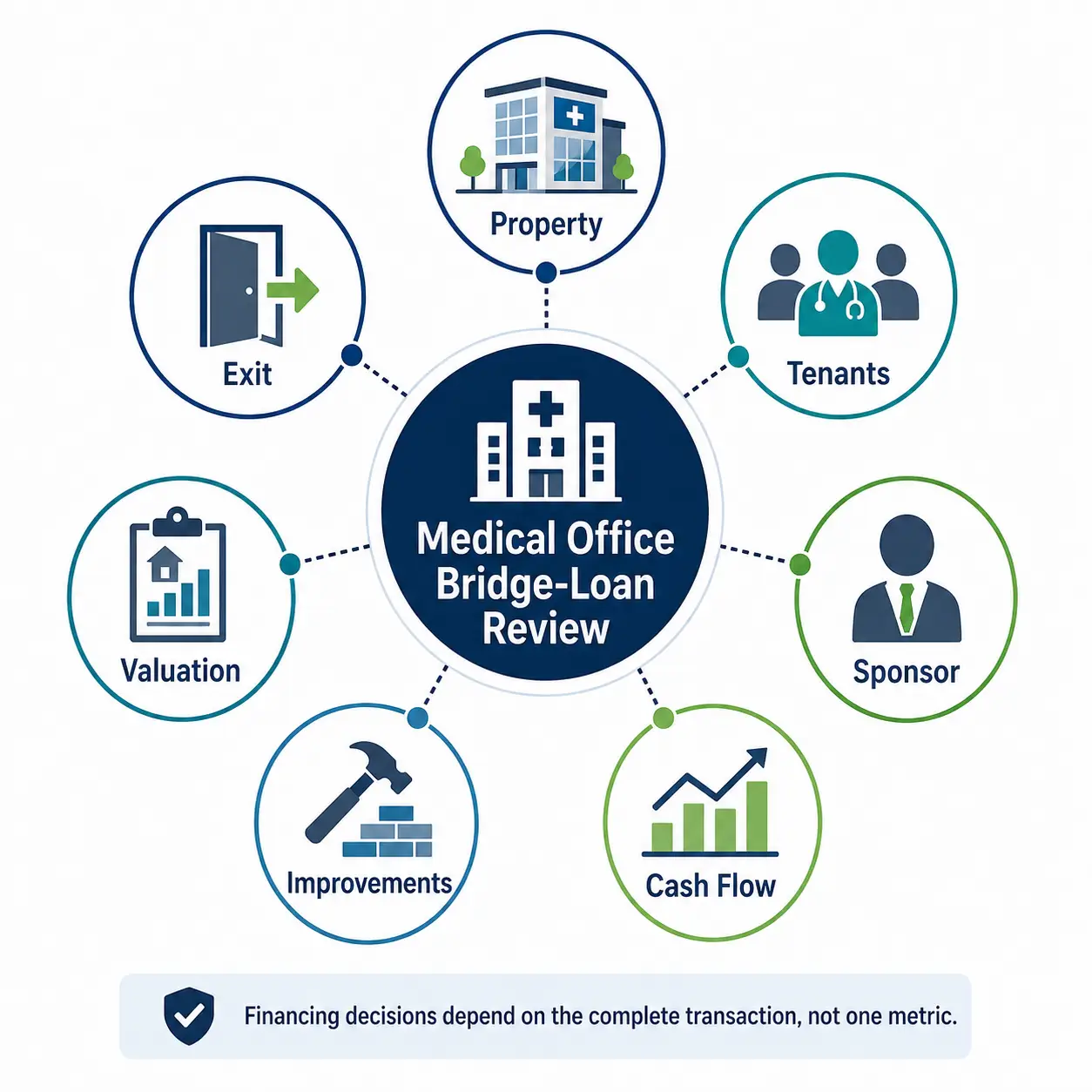
Medical office building bridge financing can provide short-term capital for an acquisition, refinance, renovation, tenant transition, lease-up, or stabilization. Direct Private Capital Group, Inc. reviews the property, tenancy, sponsor, current income, proposed improvements, available equity, and exit strategy. Financing is subject to underwriting, state eligibility, and lender or capital-provider guidelines.
What is a medical office building bridge loan?
A medical office building bridge loan is short-term commercial real estate financing used while a healthcare property is being acquired, refinanced, renovated, leased, repositioned, or prepared for longer-term financing or sale. Approval depends on the property’s condition, tenancy, value, sponsor strength, business plan, and a realistic method for repaying the bridge loan.
When can bridge financing help a medical office property?
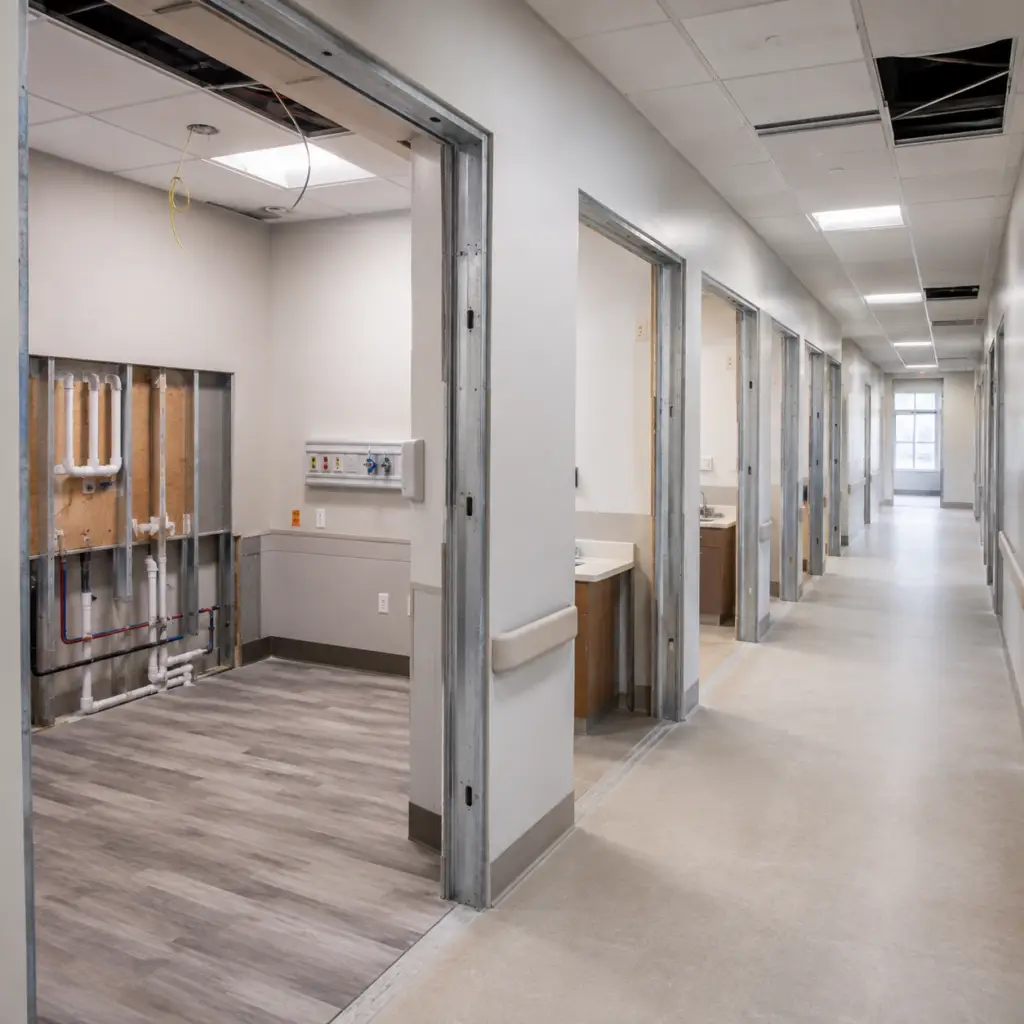
Medical office transactions may not fit the timing or operating requirements of conventional permanent financing. Common situations include:
- Acquiring a medical office building under a time-sensitive purchase agreement.
- Refinancing a maturing or unsuitable existing loan.
- Completing physician, dental, clinic, laboratory, or imaging-suite improvements.
- Leasing vacant medical suites and stabilizing occupancy.
- Renovating entrances, elevators, exam rooms, treatment areas, or building systems.
- Converting eligible general office space to medical use.
- Resolving title, ownership, documentation, or capital-structure issues.
For broader information, review DPCG’s commercial bridge loans resource.
what qualifies as a medical office building?
A medical office building is commercial real estate designed, constructed, improved, or used for outpatient healthcare-related services. The property may be occupied by one healthcare practice or divided among multiple medical tenants.
Examples can include:
- Physician offices
- Dental offices
- Outpatient clinics
- Physical therapy centers
- Diagnostic laboratories
- Imaging centers
- Ambulatory or outpatient treatment facilities
- Behavioral health offices
- Specialty medical practices
- Dialysis or infusion facilities
What medical office bridge-loan scenarios may be considered?
Medical Office Acquisition
Maturing-Loan Refinance
Lease-Up and Stabilization
Cash-Out Refinance
Renovation and Tenant Improvements
Owner-Occupied Medical Property
What do financing sources review for a medical office bridge loan?
The review may include:
- Property address and legal description
- Current and proposed medical use
- Zoning and certificate of occupancy
- Year built and renovation history
- Physical condition and deferred maintenance
- Parking and patient access
- Elevators and accessibility features
- Specialized plumbing, electrical, HVAC, imaging, or laboratory improvements
- Environmental history
- Marketability and location
The financing source may review:
- Current occupancy and vacancy
- Tenant names and healthcare specialties
- Lease commencement and expiration dates
- Base rent and expense reimbursements
- Renewal and termination rights
- Tenant-improvement obligations
- Leasing commissions and free rent
- Payment history and delinquencies
- Related-party leases
- Tenant concentration and near-term rollover
The financial review commonly examines:
- Trailing-12-month operating statements
- Year-to-date operating results
- Contract rent and collected rent
- Vacancy and concessions
- Expense reimbursements
- Property taxes and insurance
- Repairs, maintenance, utilities, and management fees
- Capital expenditures
- Current and projected net operating income
A complete review should identify:
- Current lender and unpaid balance
- Maturity date and payment status
- Prepayment or extension provisions
- First, second, and other lien positions
- Judgments, tax liens, or mechanic’s liens
- Ownership and title issues
- Easements, restrictions, or ground leases
- Required property and liability insurance
The financing source may evaluate:
- Why the bridge loan is needed
- How proceeds will be used
- Remaining renovation or tenant-improvement work
- Lease-up assumptions and occupancy goals
- Sources of borrower equity
- Operating and interest reserves
- Expected permanent refinance or sale timing
- Backup repayment plan
- Ability to support the property if the plan takes longer than expected
Which financial measurements affect medical office bridge financing?
Loan-to-Value Ratio
Loan-to-value, or LTV, compares the proposed loan amount with the property value accepted for underwriting.
LTV Formula
Proposed Loan Amount ÷ Accepted Property Value = LTV
The accepted value may be based on as-is, as-complete, stabilized, or another approved valuation basis.
Debt-Service Coverage Ratio
Debt-service coverage ratio, or DSCR, compares underwritten net operating income with required annual debt payments.
DSCR Formula
Underwritten Net Operating Income ÷ Annual Debt Service = DSCR
A transitional property may require reserves when current cash flow does not fully support debt service.
Debt Yield
Debt yield compares underwritten net operating income with the proposed loan amount.
Debt Yeild Formula
Underwritten Net Operating Income ÷ Proposed Loan Amount = Debt Yield
Debt yield does not depend directly on the loan’s interest rate or amortization.
Net Operating Income
NOI generally represents property income after approved operating expenses but before debt service, depreciation, income taxes, and certain capital expenditures.
Underwriting Note
The financing source may normalize rents and expenses or remove unsupported, nonrecurring, or above-market items.
As-Is, As-Complete, and Stabilized Value
As-is value reflects the current condition; as-complete value assumes specified work is completed; stabilized value assumes sustainable occupancy and operations.
Valuation Note
Projected values are not guaranteed and depend on completion, leasing, market conditions, and appraisal assumptions.
Interest or Operating Reserve
A reserve may support scheduled interest, operating expenses, tenant improvements, or leasing costs during a defined transition period.
Reserve Note
The existence and size of a reserve are transaction-specific and do not eliminate repayment obligations.
For official information on accessibility and environmental due diligence, review the U.S. Department of Justice ADA Title III guidance and the EPA All Appropriate Inquiries resource.
Which documents help support a medical office bridge-loan request?
A well-organized submission helps the financing source understand the property, medical use, borrower, proposed improvements, and exit. Review DPCG’s commercial loan required-documents guide for additional preparation guidance.
- Requested loan amount
- Property address and current use
- Purchase price or existing payoff
- Estimated property value
- Current occupancy
- Loan purpose and use of proceeds
- Renovation or tenant-improvement budget
- Requested closing date
- Borrower and guarantor names
- Proposed exit strategy
- Current rent roll
- Leases and amendments
- Tenant payment history
- Trailing-12-month and year-to-date statements
- Property tax and insurance information
- Survey, site plan, and floor plans
- Zoning and certificate of occupancy
- Existing appraisal or property reports
- Tenant specialties and medical uses
- Specialized improvement information
- Equipment ownership information
- Accessibility review, when available
- Medical-waste procedures, when relevant
- Parking and patient-access information
- Licenses or operating approvals relevant to occupancy
- Current mortgage statement
- Payoff demand
- Note and loan agreement
- Payment history
- Maturity and extension information
- Other liens or judgments
- Detailed cash-out use
- Ownership and capital-improvement history
- Formation documents and operating agreement
- Certificate of good standing
- Ownership schedule and organizational chart
- Personal financial statement
- Real estate schedule
- Liquidity verification through a secure process
- Sponsor résumé and project experience
- Tax returns or identification when requested securely
- Detailed scope of work
- Itemized budget and contractor bids
- Construction schedule and draw schedule
- Plans, permits, and contingency
- Executed new leases or letters of intent
- Expected rent commencement schedule
- Permanent refinance or sale plan
- Backup exit strategy
What is the medical office bridge-loan process?
Initial Scenario Review
Document Collection and File Organization
Potential Financing-Source Review
Preliminary Terms or Discussion
Formal Underwriting
Valuation and Third-Party Reports
Conditions and Loan Documentation
Closing and Post-Closing Obligations
What commonly delays a medical office bridge loan?
- Incomplete or inconsistent financial information: Rent rolls, leases, operating statements, and collections do not agree.
- Unclear property classification: The property is described as medical office but includes surgery, laboratory, hospital, skilled nursing, retail, or other uses.
- Missing lease information: Executed leases, amendments, guaranties, or tenant-improvement obligations are unavailable.
- Unsupported renovation budget: The request lacks plans, permits, contractor pricing, contingency, or a realistic schedule.
- Accessibility or code concerns: Entrances, elevators, restrooms, parking, or prior improvements require review.
- Environmental concerns: Historical uses, waste handling, tanks, chemicals, imaging, or report recommendations require investigation.
- Title or insurance problems: Liens, ownership discrepancies, easements, restrictions, or inadequate coverage remain unresolved.
- Weak exit strategy: Repayment relies on unsupported future value, leasing, or refinancing assumptions.
How can a borrower prepare a stronger submission?
- Provide one consistent transaction summary.
State the property, borrower, requested amount, current debt, occupancy, improvements, closing date, and exit. - Reconcile the numbers.
Confirm that leases, rent roll, operating statements, deposits, payoff, and budget tell the same story. - Separate current facts from projections.
Clearly label current income, executed leases, projected rent, projected occupancy, and future value. - Explain the medical use.
Identify tenant specialties, specialized improvements, equipment, parking, and patient-access needs. - Build a complete sources-and-uses schedule.
Show purchase, payoff, closing costs, improvements, leasing costs, reserves, contingency, and equity. - Prepare a realistic exit.
Explain the intended takeout source, milestones, timing, and backup plan. - Protect sensitive information.
Use an approved secure-upload process for confidential records.
How does Direct Private Capital Group assist with medical office financing?
Direct Private Capital Group, Inc. is a commercial mortgage broker and private real estate financing resource.
DPCG may assist by:
- Reviewing the initial medical office financing scenario
- Organizing property, tenancy, borrower, and improvement information
- Identifying missing or inconsistent items
- Clarifying the requested use of proceeds and exit strategy
- Presenting eligible files to possible financing sources
- Coordinating information requests during underwriting
- Communicating with borrowers, brokers, and transaction parties
DPCG does not guarantee approval, terms, funding, or closing and should not be described as the direct lender, bank, agency lender, debt fund, or owner of committed capital.

Have a medical office building transaction to review?
Provide the property address, requested loan amount, current occupancy, loan purpose, proposed improvements, and exit strategy. DPCG can conduct an initial review and identify the next information needed to evaluate the scenario.
Frequently Asked Questions About Medical Office Building Bridge Loans
A bridge loan may be considered when the buyer has a defined business purpose, sufficient equity, an acceptable property and sponsor profile, and a credible exit. The financing source will review the purchase contract, operations, tenancy, value, timing, and required improvements.
A vacant or partially vacant building may be considered, but the request generally requires a detailed lease-up or owner-occupancy plan, adequate reserves, realistic tenant-improvement costs, evidence of demand, and a documented repayment strategy.
Approved renovation or tenant-improvement costs may be included in some structures. Detailed plans, bids, permits, contractor information, contingency, inspections, and controlled draws may be required.
Medical office condominium units may be considered, subject to condominium documents, association finances, ownership concentration, unit use, occupancy, marketability, appraisal, insurance, and other underwriting requirements.
An owner-user may seek business-purpose financing to acquire, refinance, or improve a property used by its medical business. Underwriting may include both the real estate and the operating company.
Not necessarily. A transitional property may have vacancy, but the underwriter will evaluate current cash flow, reserves, tenant demand, proposed leases, improvement costs, lease-up timing, sponsor strength, and the exit strategy.
A valuation is commonly required, but the format, scope, timing, and approved appraiser are determined by the financing source. Specialized medical properties may require relevant property-type expertise.
A Phase I Environmental Site Assessment is commonly requested in commercial real estate financing, but the requirement depends on the property, transaction, financing source, and available prior reports.
A refinance may include approved cash out when supported by value, property performance, sponsor qualifications, and a documented business-purpose use. The financing source determines whether the amount and use are acceptable.
Closing time cannot be guaranteed. Timing depends on file completeness, underwriting, appraisal, environmental review, title, insurance, legal documentation, borrower responsiveness, and satisfaction of closing conditions.
Compliance Disclaimer
Direct Private Capital Group, Inc. is a commercial mortgage broker and private real estate financing resource. Information on this page is provided for general educational and informational purposes only.
Nothing on this page constitutes approval, a commitment to lend, a loan offer, a rate lock, or a guarantee of terms, proceeds, funding, or closing. Any financing that may be available is subject to complete underwriting, borrower and guarantor qualification, collateral review, valuation, title, insurance, environmental, engineering, zoning, accessibility, and other applicable third-party review, state eligibility, lender or capital-provider guidelines, market conditions, and applicable law.
Loan structures, requirements, costs, rates, leverage, reserves, recourse, prepayment terms, and closing timelines vary by transaction and financing source. Business-purpose commercial real estate financing only.
This page is not legal, tax, accounting, investment, medical, regulatory, accessibility, environmental, construction, or financial advice. Review the Consumer Financial Protection Bureau Regulation B resource for official equal-credit-opportunity information.