
Multifamily Acquisition Loans
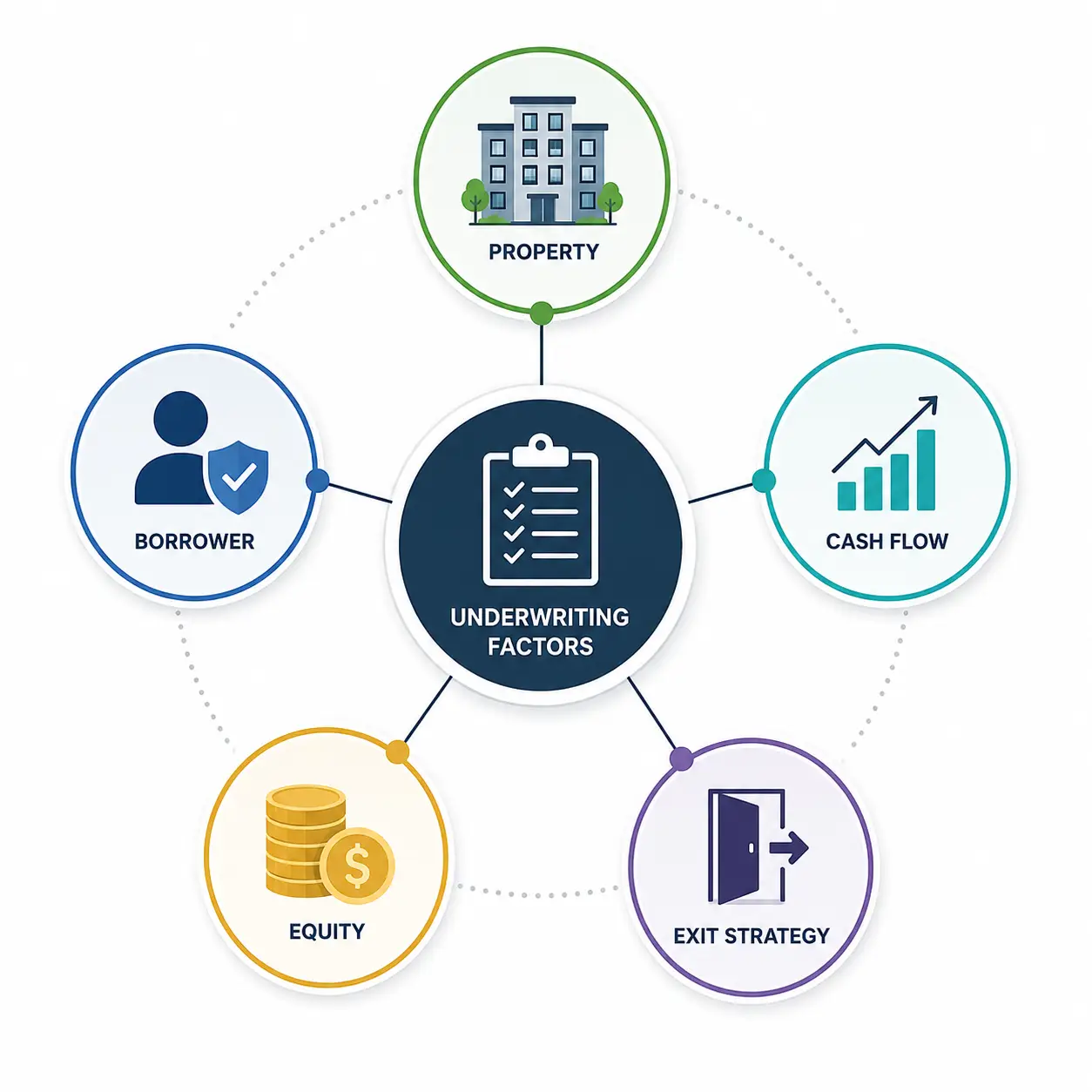
Purchasing a multifamily property requires financing that fits the property’s income, condition, occupancy, acquisition basis, improvement plan, borrower strength and exit strategy. Direct Private Capital Group, Inc. helps buyers and brokers organize acquisition scenarios, identify missing information and present eligible transactions to possible financing sources. Business-purpose financing only; all financing is subject to underwriting and applicable guidelines.
What Is a Multifamily Acquisition Loan?
A multifamily acquisition loan is business-purpose commercial real estate financing used to purchase a rental property generally containing five or more residential units. The structure may involve permanent, bridge, renovation, construction-completion or other commercial financing, depending on occupancy, income, condition, the business plan and the intended exit. Approval and terms vary by transaction and financing source.
WHY ACQUISITION FINANCING REQUIRES EARLY PLANNING?
Multifamily purchases often involve several deadlines at the same time:
- Earnest-money deposit requirements
- Financing-contingency deadlines
- Inspection and due-diligence periods
- Title and survey review
- Lease and tenant-file review
- Environmental investigation
- Appraisal and valuation
- Insurance placement
- Equity verification
- Closing-document preparation
Which Multifamily Acquisition Scenarios May Be Considered?
Stabilized Apartment Acquisition
Stabilized Apartment Acquisition
Value-Add Multifamily Acquisition
Value-Add Multifamily Acquisition
Below-Market Occupancy
Below-Market Occupancy
Immediate Repair Needs
Immediate Repair Needs
Time-Sensitive Purchase
Time-Sensitive Purchase
Portfolio or Mixed-Use Acquisition
Portfolio or Mixed-Use Acquisition
What Do Financing Sources Review for a Multifamily Acquisition?
Property and Legal Use
The review may include:
- Number of residential units
- Current legal use
- Zoning and certificate-of-occupancy status
- Mixed-use or commercial components
- Parking and storage income
- Affordable-housing restrictions
- Regulatory agreements
- Rent-control or rent-stabilization requirements
- Ground lease or leasehold interests
- Short-term rental or student-housing operations
- Nonconforming or unauthorized units
Purchase Contract Terms
The financing source may review:
- Purchase price
- Earnest-money deposit
- Deposit refundability
- Financing contingency
- Closing date and extension rights
- Seller credits and repair credits
- Assignment rights
- Purchasing entity
- Personal-property allocations
- Existing leases and contracts being assumed
Occupancy and Operations
The financial review commonly examines:
- Physical and economic occupancy
- Current rent roll and tenant ledger
- Collections, delinquency and concessions
- Lease expirations and turnover
- Trailing and year-to-date operating statements
- Taxes, insurance, utilities and payroll
- Management fees and maintenance
- Capital expenditures and reserves
- Normalized net operating income
Borrower and Sponsor
A complete review may include:
- Borrowing entity and ownership chart
- Managing members and guarantors
- Multifamily ownership and project experience
- Property-management and renovation experience
- Credit and mortgage history
- Material litigation, bankruptcy or public records
- Net worth and liquidity
- Source of equity and closing funds
- Contingent liabilities
Rent Roll and Lease Documentation
he rent roll should be consistent with the leases, tenant ledger and operating statements. Material discrepancies can delay or prevent approval.
The review may include:
- Unit number
- Unit type
- Tenant name or identifier
- Lease start and expiration
- Contract rent
- Market rent
- Security deposit
- Delinquent balance
- Concessions
- Subsidy or assistance
- Move-in and move-out status
Business Plan and Exit Strategy
The financing source may evaluate:
- Why the property is being acquired
- Renovation and operational plan
- Scope, budget, permits and contractor
- Lease-up and rent assumptions
- Capital contribution and reserves
- Projected operating performance
- Expected refinance or sale timing
- Backup exit plan
- Ability to support the property if the plan takes longer
For an example of a program-specific business-plan review, see Fannie Mae’s multifamily borrower business-plan guidance.
Which Financial Measurements Affect Multifamily Acquisition Financing?
Loan-to-Value Ratio
Loan-to-value, or LTV, compares the proposed acquisition loan amount with the property value accepted for underwriting.
Formula
Proposed Loan Amount ÷ Accepted Property Value = LTV
The accepted value may be based on an appraisal or another approved valuation method.
Debt-Service Coverage Ratio
Debt-service coverage ratio, or DSCR, compares underwritten net operating income with the required loan payments.
Formula
Underwritten Net Operating Income ÷ Annual Debt Service = DSCR
A higher DSCR generally indicates a greater income cushion above scheduled debt payments.
Debt Yield
Debt yield compares underwritten net operating income with the proposed loan amount.
Formula
Underwritten Net Operating Income ÷ Proposed Loan Amount = Debt Yield
Debt yield does not depend directly on the loan’s interest rate or amortization schedule.
Net Operating Income
Net operating income, or NOI, generally represents effective property income minus ordinary operating expenses before debt service and certain non-operating or capital items.
Formula
The financing source may adjust reported income, vacancy, concessions, taxes, insurance, management fees, reserves and other expenses to calculate underwritten NOI.
As-Is, As-Complete and Stabilized Value
As-is value reflects the property in its current condition. As-complete value estimates value after identified work. Stabilized value reflects assumed sustainable operations.
Acquisition Application
Not every acquisition relies on all three values. Projected value is not guaranteed and the financing source may apply different assumptions.
Loan-to-Cost Ratio
LTC compares the loan with eligible acquisition and project costs. The financing source determines which costs qualify.
Formula
Loan Amount ÷ Eligible Project Cost = LTC
Buyers researching longer-term multifamily financing may review the Fannie Mae Conventional Properties Term Sheet and Fannie Mae multifamily origination and underwriting resources for examples of program-specific acquisition requirements. These sources do not represent universal requirements for every transaction.
Which Documents Help Support a Multifamily Acquisition Request?
A well-organized submission helps a financing source understand the purchase, property, borrower, equity and proposed exit. Review DPCG’s complete commercial loan required-documents guide for additional borrower, entity, property, title and financing-document guidance.
Initial Acquisition Scenario
- Property address and property type
- Number of units
- Purchase price
- Requested loan amount
- Estimated current value
- Current occupancy and income
- Closing date
- Renovation or business plan
- Available equity
- Borrower experience summary
- Proposed exit strategy
- Borrower and broker contact information
Purchase and Property Documents
- Executed purchase and sale agreement
- All amendments and addenda
- Earnest-money evidence
- Current rent roll
- Trailing 12-month and year-to-date statements
- Property tax and insurance information
- Tenant ledger and lease summary
- Survey, zoning and certificate of occupancy
- Inspection, environmental and condition reports
- Capital-expenditure history
Entity and Ownership Documents
- Articles of organization or incorporation
- Operating agreement, bylaws or partnership agreement
- EIN confirmation
- Certificate of good standing, when required
- Ownership chart
- Borrowing resolution
- Manager, member or officer authorization
- Formation amendments
- Foreign registration, when applicable
- Trust documents, when applicable
Borrower and Guarantor Documents
- Commercial loan application
- Personal financial statement
- Real estate owned schedule
- Resume and experience summary
- Credit authorization
- Liquidity verification
- Bank or brokerage statements through a secure process
- Explanation of material credit events
- Government identification through a secure process
- Current financial statements, when required
Equity and Capital Stack
- Proof of deposit
- Proof of available equity
- Investor or partner contribution schedule
- 1031 exchange documentation, when applicable
- Seller-financing terms, when applicable
- Subordinate-debt terms, when applicable
- Sources-and-uses statement
- Closing-cost estimate
- Evidence supporting prior capital contributions
Renovation and Exit Documents
- Detailed scope of work
- Itemized budget and contractor bids
- Construction timeline and permit status
- Draw schedule and contingency
- Unit-turn and occupancy plan
- Rent-premium support
- Operating-deficit estimate
- Stabilized operating statement
- Refinance or sale assumptions
- Backup exit strategy
What Is the Multifamily Acquisition Financing Process?
Initial Scenario Review
Property, purchase, borrower, equity and timing
File Organization
Identify missing or inconsistent information
Financing-Source Evaluation
Review eligible loan categories and sources
Preliminary Terms
Evaluate quote, term sheet or letter of interest
Formal Underwriting
Property, borrower, financial and legal review
Third-Party Reports
Appraisal, environmental, condition and other reports
Conditions and Documents
Title, insurance, legal and closing requirements
Closing and Funding
Final authorization and post-closing obligations
What Commonly Delays a Multifamily Acquisition Loan?
- Incomplete or inconsistent financials: The rent roll, operating statements, leases and deposits do not reasonably match.
- Unsupported purchase assumptions: Projected rents, expense reductions, occupancy or future value lack support.
- Property-classification problems: Mixed-use, boarding, short-term rental or specialized operations change eligibility.
- Unauthorized units or use: Missing permits or certificates affect value, insurance and legal use.
- Title and survey issues: Liens, easements, encroachments or ownership discrepancies require correction.
- Insurance or environmental issues: Coverage or environmental concerns require additional review.
- Missing equity documentation: The source and availability of funds are unclear.
- Weak renovation budget or exit: Costs, reserves, lease-up and repayment assumptions are incomplete.
- Last-minute changes: Purchase price, ownership, loan amount or closing date changes require renewed review.
How to Prepare a Stronger Submission?
- Provide a fully executed purchase agreement and every amendment.
- Submit a current rent roll and complete historical operating statements.
- Explain material variances before the financing source discovers them.
- Provide a clear ownership and guarantor structure.
- Document the source of equity.
- Prepare a detailed borrower-experience summary.
- Itemize renovations instead of presenting one unsupported total.
- Identify required permits and their current status.
- Use realistic income, vacancy and expense assumptions.
- Provide a written exit strategy and backup exit.
- Keep the financing team informed of contract changes.
- Submit sensitive records through the approved secure process.
- Confirm property classification early.
- Address title, insurance and environmental concerns promptly.
- Avoid presenting projected value as guaranteed.
How Does Direct Private Capital Group Assist With Multifamily Acquisition Financing?
Direct Private Capital Group, Inc. is a commercial mortgage broker and private real estate financing resource.
DPCG may assist by:
- Reviewing the initial acquisition scenario
- Identifying incomplete or inconsistent information
- Organizing property, purchase and borrower documents
- Clarifying the requested loan structure
- Presenting eligible files to possible financing sources
- Coordinating information requests during review
DPCG does not guarantee approval, terms, funding or closing and should not be described as the direct lender unless verified evidence supports that role for a specific transaction.

Start Your Multifamily Acquisition Financing Review
Provide the property address, purchase price, requested loan amount, unit count, occupancy, income, renovation plan, borrower experience, available equity and expected closing date. DPCG can conduct an initial review and identify the next information needed to evaluate the scenario.
Submitting a scenario does not constitute approval, a financing commitment or a rate lock.
Frequently Asked Questions About Multifamily Acquisition Loans
Many commercial multifamily financing programs treat properties with five or more residential units as multifamily real estate. Mixed-use buildings, student housing, senior housing, boarding arrangements, short-term rentals and other specialized operations may be classified differently.
Some financing structures may include both acquisition and eligible renovation costs. The financing source will generally review the scope, budget, contractor, contingency, permits, draw process, borrower experience and projected completion value.
Experience requirements vary. A financing source may consider previous ownership, management, construction, renovation and commercial real estate experience. A first-time buyer may need experienced partners, managers, contractors or additional support.
There is no universal down-payment requirement for every multifamily acquisition loan. Required equity depends on the property, purchase basis, value, income, condition, business plan, borrower strength and financing source.
Projected income may be considered in some transitional or renovation transactions, but it is generally reviewed alongside current income, market evidence, renovation plans, lease-up assumptions, expenses, reserves and the borrower’s ability to execute the business plan.
A financing source may request a current rent roll, trailing operating statement, year-to-date statement, prior-year statements, tax returns, bank activity, general ledger, property tax bills, insurance information and supporting leases. Requirements vary.
Many multifamily acquisition loans require an appraisal ordered or approved by the financing source. A borrower-supplied appraisal may not satisfy the required independence, scope, timing or engagement standards.
Environmental requirements vary by financing source, property and program. A Phase I assessment is common in commercial real estate financing, but the required scope, standard, timing and reliance must be confirmed for the transaction.
Closing time depends on file completeness, financing structure, property complexity, third-party reports, title, insurance, appraisal, legal documentation, borrower responsiveness and financing-source approval. No timeline should be guaranteed.
A property with low occupancy, weak collections, major repairs or an incomplete business plan may require transitional financing rather than conventional permanent financing. The structure must address operating shortfalls, improvements, lease-up and the exit.
Compliance Disclaimer
Direct Private Capital Group, Inc. is a commercial mortgage broker and private real estate financing resource. The information on this page is provided for general informational and educational purposes only.
Nothing on this page constitutes an approval, commitment to lend, loan offer, rate lock or guarantee of terms, proceeds, funding or closing. Any financing is subject to complete underwriting, borrower and guarantor qualification, collateral review, appraisal and valuation, title, insurance, documentation, third-party reports, state eligibility, lender, investor or capital-provider guidelines, market conditions and applicable law.
Loan structures, requirements, costs, rates, leverage, reserves, recourse, prepayment terms and closing timelines vary by transaction and financing source. Business-purpose and investment-property financing only where applicable.
This page is not legal, tax, accounting, investment or financial advice. Borrowers should consult their own qualified advisers. Equal-credit-opportunity requirements can apply to commercial and business credit. Review the Consumer Financial Protection Bureau’s Regulation B resource for official information. Environmental due diligence may also be relevant; see the EPA’s All Appropriate Inquiries guidance.