

Home » Bridge Loans » Unanchored Strip Mall Bridge Loans
Unanchored Strip Mall Bridge Loans
Short-term bridge financing may help qualified investors acquire, refinance, lease up, renovate, or reposition an unanchored multi-tenant retail center. Direct Private Capital Group, Inc. reviews the property, tenant mix, leases, operating performance, borrower, requested use of proceeds, and exit strategy. Financing remains subject to underwriting, state eligibility, and lender or capital-provider guidelines.
What is an unanchored strip mall bridge loan?
An unanchored strip mall bridge loan is short-term, business-purpose commercial bridge financing secured by a multi-tenant retail property that does not rely on one dominant anchor tenant. It may be considered when an owner or buyer needs time to improve occupancy, renew leases, complete renovations, resolve maturing debt, or prepare the property for a sale or longer-term refinance.
When might an unanchored retail center need bridge financing?
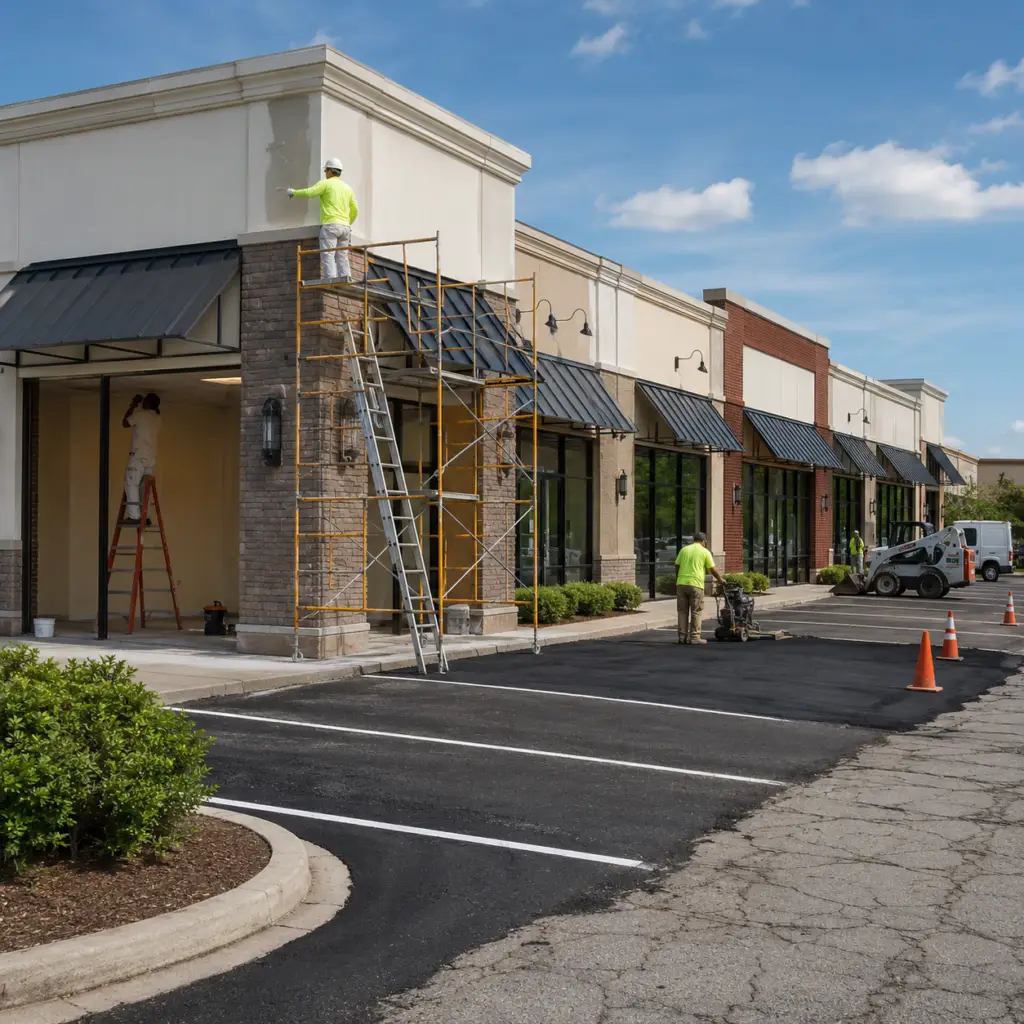
Bridge financing may become relevant when the property is not yet ready for permanent financing or a transaction must be completed before a longer-term plan can be executed.
- Purchasing a strip mall with vacancies or short-term leases.
- Replacing a maturing commercial mortgage.
- Refinancing while leases are being renewed.
- Funding approved tenant improvements or common-area work.
- Repositioning an outdated neighborhood retail center.
- Stabilizing income after losing one or more tenants.
- Addressing deferred maintenance before refinancing.
- Acquiring a property with a firm closing deadline.
- Consolidating eligible property-related debt.
- Preparing the property for sale after operational improvements.
A stabilized center with durable leases and no major capital needs may be better suited to longer-term commercial real estate financing, subject to the applicable program.
What does an unanchored strip mall Mean?
An unanchored strip mall is generally a row or cluster of retail suites that does not rely on one dominant anchor tenant.
Terms sometimes used for similar properties include:
- Neighborhood strip center
- Convenience retail center
- Multi-tenant retail property
- Local shopping center
- Unanchored retail plaza
- Community retail strip
The exact property classification should be based on the asset’s layout, tenant mix, size, market function and appraisal—not simply the name used by the borrower or listing broker.
Which unanchored strip mall bridge-loan scenarios may be considered?
Acquisition Bridge Loan
Acquisition Bridge Loan
Maturing Debt Refinance
Maturing Debt Refinance
Lease-Up and Tenant Rollover
Lease-Up and Tenant Rollover
Retail Property Renovation
Retail Property Renovation
Low-Occupancy Repositioning
Low-Occupancy Repositioning
Ownership Restructuring
Ownership Restructuring
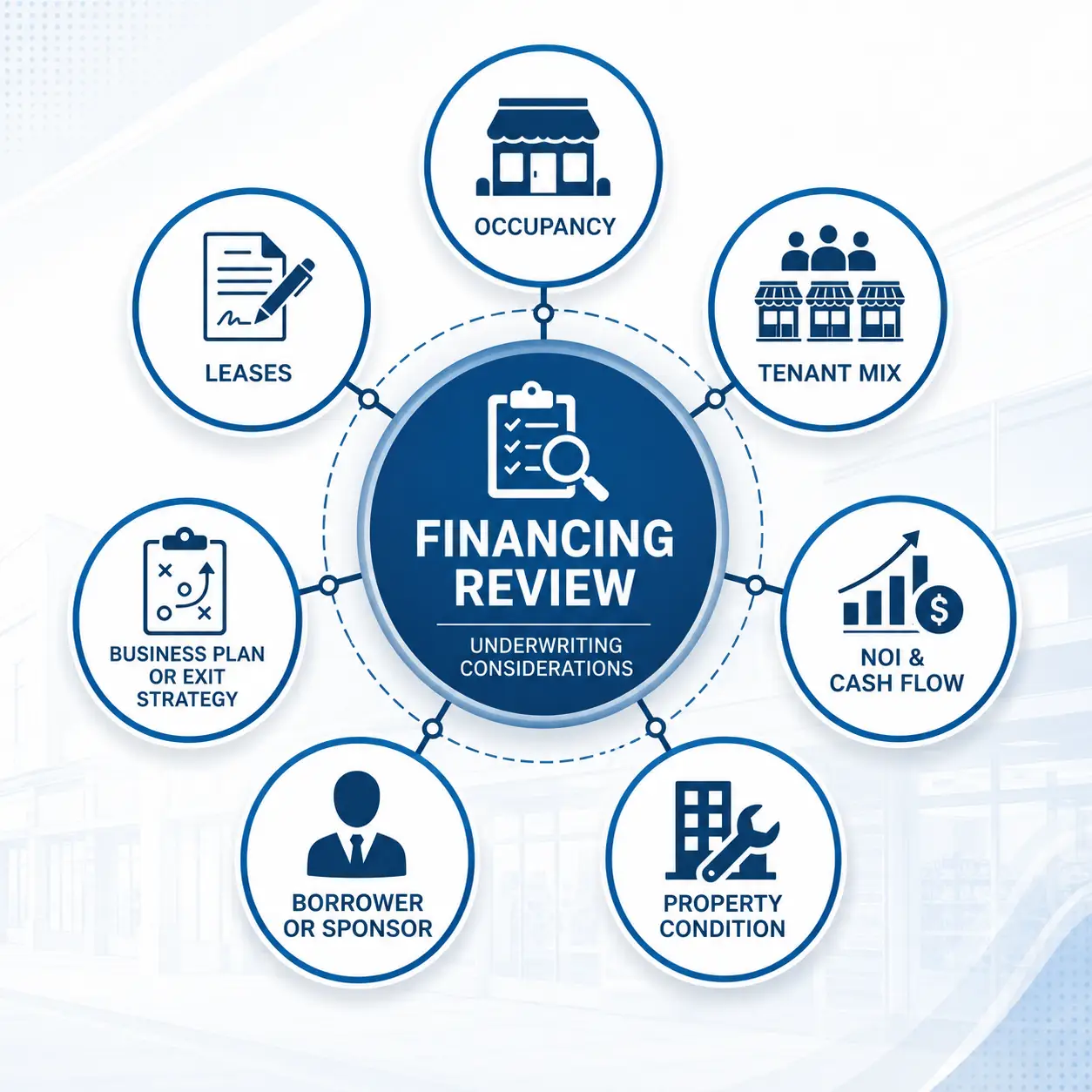
What do financing sources review for an unanchored strip mall?
Property, Location and Access
The review may include:
- Street visibility and signage
- Ingress and egress
- Traffic patterns
- Parking and shared access
- Nearby residential and daytime population
- Competing retail centers
- Property condition and deferred maintenance
- Zoning and legal use
- Title, easements, and reciprocal agreements
- Environmental history
Tenant Mix and Lease Quality
The financing source may review:
- Tenant names and business types
- Suite sizes and rent concentration
- Lease start and expiration dates
- Renewal and termination options
- Tenant payment history
- Related-party tenants
- Common-area reimbursements
- Tenant-improvement obligations
- Historical turnover
- Pending move-outs or new leases
Occupancy, Income and Expenses
The financial review commonly examines:
- Physical and economic occupancy
- Current rent roll and tenant ledger
- Trailing operating statements
- Year-to-date results
- Base rent and reimbursements
- Vacancy and concessions
- Taxes and insurance
- Repairs, utilities, and management
- Normalized net operating income
- Projected versus in-place income
Borrower and Sponsor Strength
A complete review may identify:
- Ownership and entity structure
- Retail-property and leasing experience
- Credit history, when applicable
- Liquidity and net worth
- Required equity contribution
- Post-closing reserves
- Property-management plan
- Leasing and construction team
- Contingent liabilities
- Ability to support delays or cost overruns
Business Plan and Exit Strategy
The financing source may evaluate:
- Why short-term financing is needed
- Itemized use of proceeds
- Remaining repairs or renovations
- Lease-up assumptions
- Tenant-improvement and commission costs
- Interest or operating reserves
- Expected refinance or sale timing
- Backup repayment strategy
- Ability to perform if stabilization takes longer
General bank-oriented commercial real estate risk concepts are discussed in the OCC Commercial Real Estate Lending handbook.
Which financial measurements affect a strip mall bridge loan?
Loan-to-Value Ratio
Loan-to-value, or LTV, compares the proposed loan amount with the property value accepted for underwriting.
LTV Formula
Loan Amount ÷ Accepted Property Value = LTV
The accepted value may be the current as-is value rather than the owner’s projected stabilized value.
Debt-Service Coverage Ratio
DSCR compares underwritten net operating income with annual debt service.
DSCR Formula
Underwritten Net Operating Income ÷ Annual Debt Service = DSCR
A transitional center may require additional reserves or borrower support when current income is insufficient.
Debt Yield
Debt yield compares underwritten net operating income with the proposed loan amount.
Debt Yeild Formula
Underwritten Net Operating Income ÷ Proposed Loan Amount = Debt Yield
Debt yield does not depend directly on the interest rate or amortization schedule.
Net Operating Income
NOI generally represents effective property income minus approved operating expenses before mortgage debt service, depreciation, income taxes, and certain capital costs.
NOI Formula
Effective Property Income − Operating Expenses = NOI
The underwriter may normalize unsupported, nonrecurring, or above-market items.
As-Is and Stabilized Value
As-is value reflects the property in its current condition. Stabilized value reflects an assumed condition after occupancy, income, and operations reach a sustainable level.
Value Review
Projected stabilized value does not replace a current as-is valuation. The relevant valuation basis depends on the transaction and financing source.
Loan-to-Cost and Cost Basis
LTC compares the loan with eligible project cost. Cost basis may include purchase price, approved improvements, and documented project expenses.
LTC Formula
Loan Amount ÷ Total Eligible Project Cost = LTC
Not every bridge loan is sized using LTC, and eligible costs vary by financing source.
These measurements are educational concepts, not published program thresholds. Actual sizing depends on the property, borrower, requested use, current market conditions, and the applicable lender or capital-provider guidelines.
Which documents help support an unanchored strip mall bridge-loan request?
A well-organized submission helps the financing source understand the property, tenants, borrower, requested structure, and proposed exit. Review DPCG’s commercial loan required-documents guide for broader borrower, entity, property, title, and financing-document guidance.
Initial Loan Scenario
- Property address and property type
- Requested loan amount
- Purchase price or current payoff
- Estimated current value
- Number of retail suites
- Total rentable square footage
- Current occupancy
- Loan purpose and use of proceeds
- Requested closing date
- Business plan and exit strategy
Property and Lease Documents
- Current rent roll
- Leases and amendments
- Tenant payment ledger
- Historical occupancy
- Trailing and year-to-date operating statements
- Tax and insurance information
- CAM reconciliations
- Site plan, survey, and zoning information
- Property photographs
- Existing appraisal or reports, if available
Entity Documents
- Articles of organization or incorporation
- Operating agreement, bylaws, or partnership agreement
- EIN confirmation
- Certificate of good standing, when required
- Ownership schedule and organizational chart
- Borrowing resolution
- Authorized signer documentation
Acquisition or Refinance Documents
- Purchase agreement and amendments
- Deposit verification and closing deadline
- Current mortgage statement
- Payoff demand
- Existing note and security instrument
- Payment history
- Existing liens
- Sources-and-uses statement
- Itemized cash-out request, if applicable
Borrower and Guarantor Documents
- Loan application
- Personal financial statement
- Schedule of real estate owned
- Liquidity verification
- Experience summary
- Credit authorization, when applicable
- Explanations for material credit, legal, or ownership issues
- Identification and sensitive records through an approved secure process
Renovation and Lease-Up Documents
- Detailed scope of work
- Itemized budget and contingency
- Contractor information and bids
- Project schedule and permit status
- Draw schedule
- Tenant-improvement obligations
- Leasing commission schedule
- Letters of intent or executed new leases
- Market-rent support
- Stabilized operating projection
What is the unanchored strip mall bridge-loan process?
Initial Retail Scenario Review
Document Collection and File Organization
Preliminary Financing Discussion
Term Indication or Letter of Intent
Formal Underwriting
Appraisal and Third-Party Reports
Conditions and Closing Documents
Closing, Funding, and Post-Closing Obligations
What commonly delays an unanchored strip mall bridge loan?
- Inconsistent rent information: The rent roll does not match leases, deposits, or operating statements.
- Undisclosed tenant problems: Late payments, pending move-outs, side agreements, or unreported vacancies affect income.
- Weak lease documentation: Missing leases, unsigned amendments, or unclear renewal terms make income difficult to verify.
- Unsupported valuation: The requested value is not supported by current income, condition, or market evidence.
- Incomplete improvement budget: Tenant improvements, leasing commissions, permits, contingencies, or major repairs are omitted.
- Environmental concerns: Current or former dry-cleaning, automotive, fuel, or other higher-risk uses require additional review.
- Title, access, or parking issues: Liens, easements, reciprocal agreements, or shared parking rights are unresolved.
- Insurance issues: Coverage, deductibles, valuation, or property-condition concerns remain unresolved.
- Unclear use of proceeds or exit: The requested funds or repayment strategy are not fully documented.
- Late transaction changes: Ownership, price, loan amount, tenant status, or property condition changes during underwriting.
How can a borrower prepare a stronger retail loan submission?
- Provide a complete rent roll.
Include tenant names, suite sizes, rent, lease dates, options, and payment status. - Reconcile the records.
Make sure leases, deposits, rent rolls, and operating statements tell the same story. - Explain every vacancy.
State its duration, condition, asking rent, and leasing plan. - List upcoming lease expirations.
Identify likely renewals, departures, and required concessions. - Document property condition.
Provide photographs, repair estimates, and a realistic improvement plan. - Prepare sources and uses.
Show acquisition or payoff, improvements, closing costs, reserves, and borrower equity. - Identify the operating team.
Explain who will manage leasing, property operations, and construction. - Support the exit.
Show what must occur before a refinance or sale can repay the bridge loan. - Disclose issues early.
Address title, credit, environmental, insurance, and tenant concerns at the start. - Use secure document delivery.
Do not send sensitive records through an unsecured form or email.
How does Direct Private Capital Group assist with urban retail condo bridge financing?
Direct Private Capital Group, Inc. is a commercial mortgage broker and private real estate financing resource.
DPCG may assist by:
- Reviewing the initial strip mall loan scenario.
- Organizing property, tenant, and borrower information.
- Identifying incomplete or inconsistent documents.
- Clarifying the use of proceeds and exit strategy.
- Presenting eligible transactions to possible financing sources.
- Coordinating information requests during the review process.
- Communicating with borrowers, brokers, and transaction parties as the file progresses.
DPCG does not guarantee approval, terms, funding, or closing and is not represented on this page as the direct lender, bank, agency lender, servicer, debt fund, or owner of committed capital.

Have an unanchored strip mall to finance?
Provide the property address, suite count, current occupancy, tenant mix, purchase price or payoff, requested loan amount, estimated value, business plan, and exit strategy. DPCG can conduct an initial review and identify the next information needed to evaluate the scenario.
Frequently Asked Questions About Unanchored Strip Mall Bridge Loans
A vacant or partly vacant strip mall may be reviewed, but the financing source will generally need a credible business plan, sufficient borrower capacity, a realistic leasing strategy, adequate reserves, and a supportable exit. Eligibility depends on the complete transaction.
Not necessarily. The property is unanchored by definition, but the financing source will review tenant mix, income concentration, location, occupancy, lease rollover, and the marketability of individual suites.
Some structures may include approved renovation or tenant-improvement proceeds. A detailed scope, budget, contractor information, schedule, permit status, draw process, and contingency may be required.
Short-term leases may be considered, but they create rollover risk. Tenant history, renewal discussions, market rent, suite demand, and replacement costs may receive additional review.
A low-occupancy center may still be reviewed when there is sufficient value, borrower support, a credible stabilization plan, realistic reserves, and a supportable exit strategy.
Personal credit may be reviewed for guarantors or principals, depending on the financing source and transaction. No universal minimum credit score applies to every strip mall bridge loan.
Projected income may be considered as part of the business plan, but it does not replace verified in-place income. Assumptions should be supported by market evidence, executed leases, letters of intent, or documented leasing activity.
The requirement depends on the property and financing source. Environmental review is especially important when current or former tenants include dry cleaners, fuel operations, auto repair, printing, or other uses associated with potential contamination. Review the EPA All Appropriate Inquiries resource for general information.
There is no universal closing timeframe. Timing depends on file completeness, appraisal, environmental review, title, insurance, property condition, borrower cooperation, legal documentation, and final approval. No closing date is guaranteed.
Common exits include refinancing after occupancy and NOI improve, selling after repositioning, or repaying the loan from another documented capital event. The exit must be realistic and supported by the transaction facts.
Compliance Disclaimer
Direct Private Capital Group, Inc. is a commercial mortgage broker and private real estate financing resource. The information on this page is for general informational and educational purposes only.
Nothing on this page constitutes approval, a commitment to lend, a loan offer, a rate lock, or a guarantee of terms, proceeds, funding, or closing. Any financing that may be available is subject to complete underwriting, borrower and guarantor qualification, collateral review, valuation, lease and cash-flow review, title, insurance, environmental review, documentation, third-party reports, state eligibility, lender, investor, or capital-provider guidelines, market conditions, and applicable law.
Loan structures, requirements, costs, rates, leverage, reserves, recourse, prepayment terms, and closing timelines vary by transaction and financing source. Business-purpose and investment-property financing only where applicable.
This page is not legal, tax, accounting, investment, or financial advice. Borrowers should consult their own qualified advisers. Equal-credit-opportunity requirements can apply to commercial and business credit; review the CFPB Regulation B resource for official information.