
Duplex Bridge Loans
Short-term business-purpose financing for two-unit investment properties. Direct Private Capital Group, Inc. assists investors, owners, buyers, and brokers with organizing qualified duplex purchase, refinance, renovation, lease-up, and transitional loan scenarios for review by potential financing sources.
What Is a Duplex Bridge Loan?
A duplex bridge loan is short-term financing secured by a two-unit investment property. It may be used for a purchase, refinance, renovation, tenant transition, or stabilization period when permanent financing is not yet appropriate. Learn more about bridge loans.
When Might Duplex Bridge Financing Be Needed?
Duplex bridge financing may be considered when:
- An investor is purchasing a duplex under a time-sensitive contract.
- An existing loan is approaching maturity.
- One or both units require renovation before permanent financing.
- A vacant unit must be repaired, marketed, and leased.
- The property needs temporary financing while title, insurance, permit, or occupancy issues are resolved.
- The borrower plans to refinance after rents, occupancy, or property condition improve.
- A documented business-purpose cash-out request is supported by equity and underwriting.
How Does Duplex Bridge Loans Work?
A bridge loan is intended to cover a defined period between the borrower’s current situation and a planned exit. The financing source evaluates whether the collateral, borrower, transaction structure, and exit plan provide a reasonable path to repayment.
For a duplex, the review normally considers the entire property rather than treating each unit as an unrelated transaction.
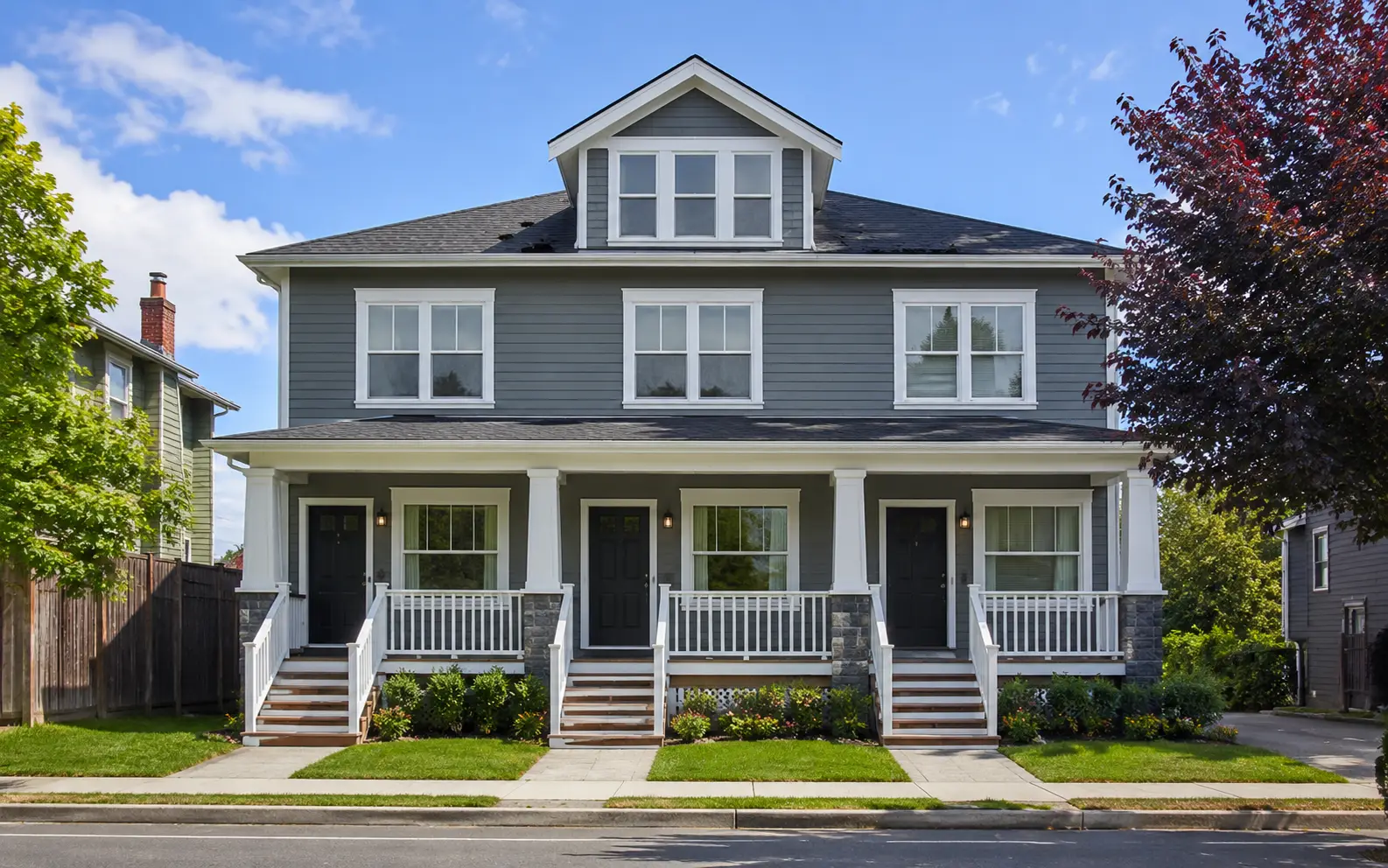
What Can Duplex Bridge Financing Be Used For?
Duplex Purchase
Duplex Purchase
Duplex Refinance
Duplex Refinance
Renovation
Renovation
Lease-Up
Lease-Up
Business-Purpose Cash-Out
Business-Purpose Cash-Out
Property Repositioning
Property Repositioning
What Loan Purposes May Be Reviewed?
Property Classification and Legal Use
The financing source may verify that the property is legally recognized and used as a two-unit property. This can involve reviewing zoning, permits, certificates of occupancy, appraisal information, tax records, and municipal records.
An unpermitted second unit, converted garage, basement apartment, or inconsistent public record can create an underwriting issue.
Occupancy
The review may examine whether:
- Both units are occupied
- One unit is vacant
- Both units are vacant
- Existing occupants have written leases
- Any unit is occupied by the borrower or a related party
- The proposed use remains a qualified business purpose
Property Condition
The financing source may evaluate:
- Roof, foundation, and structure
- Electrical, plumbing, and mechanical systems
- Heating and cooling
- Water intrusion or mold concerns
- Fire and life-safety conditions
- Deferred maintenance
- Unit interiors
- Shared and separate systems
- Access and parking
- Code violations
Value and Cost Basis
The review may consider the purchase price, existing debt, borrower equity, as-is value, renovation cost, projected value, and local market support.
A financing source may obtain or require an appraisal, broker price opinion, automated valuation, inspection, feasibility review, or another permitted form of collateral analysis.
Rental Income and Operating Performance
For an occupied or partially occupied duplex, requested information may include:
- Current leases
- Rent roll
- Rent-payment history
- Bank deposits
- Security-deposit information
- Utility responsibility
- Operating expenses
- Taxes and insurance
- Maintenance records
Equity and Sources of Funds
The borrower may need to document:
- Earnest-money deposit
- Down payment
- Closing costs
- Renovation contribution
- Reserves
- Existing equity
- Source of funds
- Required cash remaining after closing
Which Financial Measurements May Affect Duplex Bridge Financing?
Loan-to-Value Ratio
LTV compares the proposed loan amount with the property value accepted for underwriting.
LTV Formula
Proposed Loan Amount ÷ Accepted Property Value = LTV
The accepted value may come from an appraisal or another approved valuation method.
Loan-to-Cost Ratio
LTC compares the proposed loan amount with eligible purchase and improvement costs.
LTC Formula
Proposed Loan Amount ÷ Total Eligible Project Cost = LTC
LTC may be relevant for acquisition and renovation scenarios.
Debt-Service Coverage Ratio
DSCR compares underwritten net operating income with annual debt service when property cash flow is relevant.
DSCR Formula
Underwritten Net Operating Income ÷ Annual Debt Service = DSCR
The financing source determines which income and expenses are included.
After-Repair Value
ARV estimates the duplex value after an identified renovation plan is completed.
Valuation Note
ARV should be supported by the scope, budget, property condition, comparable sales, and valuation review.
As-Is and Stabilized Value
As-is value reflects current condition. Stabilized value may assume sustainable occupancy, rents, and operating performance.
Property-Specific Review
Not every transaction uses every value. The appraisal scope depends on the property and financing request.
Cost Basis and Reserves
Cost basis may include purchase price and verified improvements. Reserves may support interest, repairs, taxes, insurance, and operating costs.
Transaction-Specific Review
Recognized costs and required reserves vary by borrower, property, loan purpose, and financing source.
No maximum LTV, LTC, ARV, DSCR, loan amount, rate, fee, term, reserve, or credit threshold is represented on this page. Actual terms require current, transaction-specific verification.
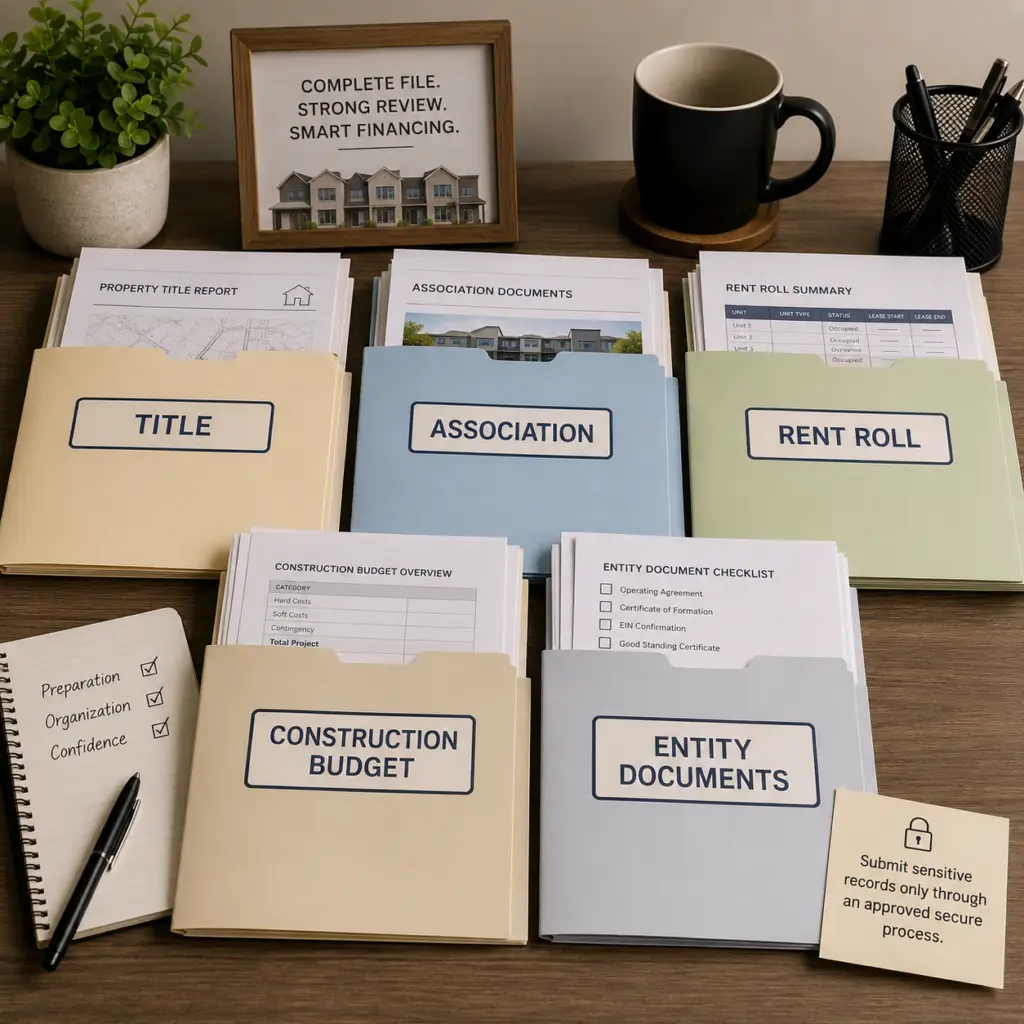
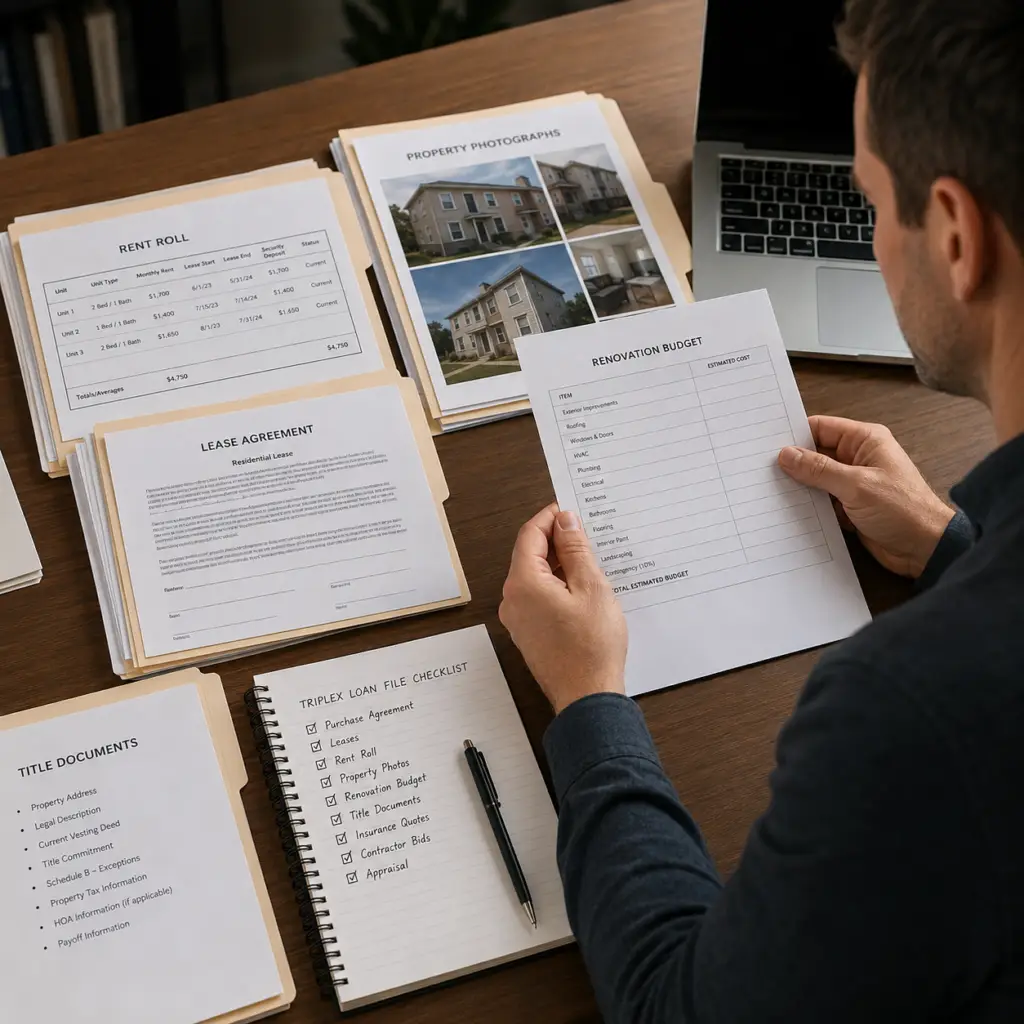
What Documents Should Be Prepared?
A complete submission helps a financing source understand the duplex, borrower, requested loan purpose, business plan, and exit. Review DPCG’s commercial loan required-documents guide and borrower FAQs.
Initial Loan Scenario
Core facts needed for preliminary review
- Property address
- Requested amount and loan purpose
- Purchase price or estimated value
- Existing payoff
- Current occupancy and rents
- Requested closing date
- Borrower experience
- Proposed exit
Property Documents
Evidence supporting the collateral
- Purchase agreement or payoff statement
- Current photographs
- Leases and rent roll
- Tax and insurance information
- Title report
- Appraisal or valuation
- Zoning, permits, and certificate of occupancy when relevant
Renovation Documents
Scope, cost, and completion support
- Detailed scope of work
- Line-item budget
- Contractor bids
- Permit status
- Construction schedule
- Contingency
- Draw schedule
- Projected rents and value
Borrower Documents
Identity, experience, and financial capacity
- Loan application
- Personal financial statement
- Real estate owned schedule
- Liquidity evidence through a secure process
- Experience summary
- Credit explanation when requested
Entity Documents
Ownership, authority, and entity structure
- Articles of organization or incorporation
- Operating agreement or bylaws
- EIN confirmation
- Certificate of good standing
- Ownership schedule
- Borrowing resolution
- Signing-authority documents
Financial and Exit Documents
Cash flow, debt, and repayment evidence
- Current leases
- Rent-payment history
- Operating statement
- Bank deposits when relevant
- Existing debt schedule
- Use-of-proceeds breakdown
- Projected stabilized rents
- Sale or refinance exit support
How Does the Duplex Bridge Loan Process Work?
Initial Scenario Review
Preliminary Eligibility Discussion
Document Collection
Financing-Source Review
Preliminary Terms or Indication
Formal Underwriting and Third-Party Reports
Conditions and Final Approval
Closing and Post-Closing Obligations
What Can Delay a Duplex Bridge Loan?
- Incomplete documents: Missing leases, payoff information, entity records, or source-of-funds evidence.
- Unpermitted second unit: Public records do not support legal two-unit use.
- Occupancy issues: Actual occupancy differs from the application or intended business purpose.
- Unsupported value or rents: Estimates are not supported by the property, market, or documentation.
- Title problems: Liens, judgments, vesting, probate, or ownership issues remain unresolved.
- Insurance problems: Vacancy, condition, claims, or renovation work affects coverage.
- Weak renovation budget: Costs, permits, contingency, or contractor information are incomplete.
- Unclear exit: The sale or permanent refinance plan is not adequately supported.
How Can a Borrower Prepare a Stronger Submission?
- Confirm legal two-unit status.
- Provide a clear one-page transaction summary.
- Document each unit separately.
- Prepare a realistic renovation budget.
- Organize borrower and entity documents.
- Disclose title, permit, insurance, occupancy, and condition issues early.
- Support current and projected rents.
- Explain the sale or refinance exit.
- Keep all figures consistent.
- Use an approved secure-upload process for sensitive records.
How Does Direct Private Capital Group, Inc. Assist?
Direct Private Capital Group, Inc. serves as a commercial mortgage broker and private real estate financing resource.
For a qualified duplex scenario, DPCG may assist by:
- Reviewing the initial request
- Organizing property and borrower information
- Identifying missing documentation
- Clarifying the use of proceeds and exit
- Presenting eligible scenarios to possible financing sources
- Communicating questions and conditions
DPCG does not guarantee approval, terms, funding, valuation, or closing.
Start With a Clear Duplex Bridge-Loan Scenario
Tell us the property location, requested amount, purchase price or estimated value, current occupancy, rents, existing debt, renovation budget, borrower experience, closing objective, and proposed exit. Submission does not create a commitment to lend.
Duplex Bridge-Loan FAQs
A business-purpose bridge loan may be considered for a duplex purchase when the borrower, property, contract, equity, value, and exit meet the financing source’s guidelines.
Some bridge structures may include renovation funds. A detailed scope, budget, contractor information, permit status, contingency, and draw process may be required.
A bridge refinance may be considered for a maturing loan, temporary payoff need, renovation plan, lease-up period, or another documented business purpose.
Not necessarily. A duplex may be occupied, partially occupied, or vacant, depending on the program and business plan. Vacancy can affect value, insurance, reserves, and the exit.
Owner occupancy can materially change the legal and program classification. This page addresses business-purpose investment-property financing only, and actual occupancy must be disclosed.
An unpermitted unit may affect classification, value, insurance, appraisal, rental-income treatment, and eligibility.
Rental income may be reviewed. Financing sources may examine leases, rent history, occupancy, market rents, expenses, condition, and income continuity.
Experience requirements vary. Ownership, renovation, landlord, construction, and property-management history may be considered with credit, liquidity, equity, collateral, and exit strength.
Timing depends on documentation, underwriting, valuation, title, insurance, property condition, third-party reports, borrower responsiveness, and satisfaction of conditions. No timeline is guaranteed.
The exit should identify a realistic repayment source. A refinance exit should address future value, rent, occupancy, credit, liquidity, and takeout eligibility. A sale exit should address value, marketability, selling costs, and timing.
Compliance Disclaimer
Direct Private Capital Group, Inc. is a commercial mortgage broker and private real estate financing resource.
The information on this page is for general educational purposes only. It is not a commitment to lend, approval, rate lock, or guarantee of terms, funding, valuation, closing, proceeds, or timing.
Any financing is subject to underwriting; borrower and guarantor qualification; collateral review and valuation; legal property use; title; insurance; documentation; third-party reports; state eligibility; financing-source guidelines; market conditions; and applicable law.
Business-purpose and investment-property financing only. This page does not offer consumer-purpose residential mortgage financing.
Review the Privacy Policy before submitting personal information. For fair-lending information, review the CFPB Regulation B resource.