

Gas Station Financing
For Investors and Operators
Gas station financing helps investors, operators, brokers, and business-purpose borrowers understand how private lenders may review gas stations, convenience stores, fuel stations, acquisitions, refinances, and value-add projects. Direct Private Capital Group, Inc. reviews collateral, borrower strength, operating history, environmental due diligence, fuel contracts, title, valuation, and exit strategy to help qualified borrowers explore available private lending options. All terms are subject to underwriting.
What This Page Helps Borrowers Understand
Gas station and convenience store loans can be more detailed than standard commercial real estate financing because lenders may need to review both the real estate and the business operations.
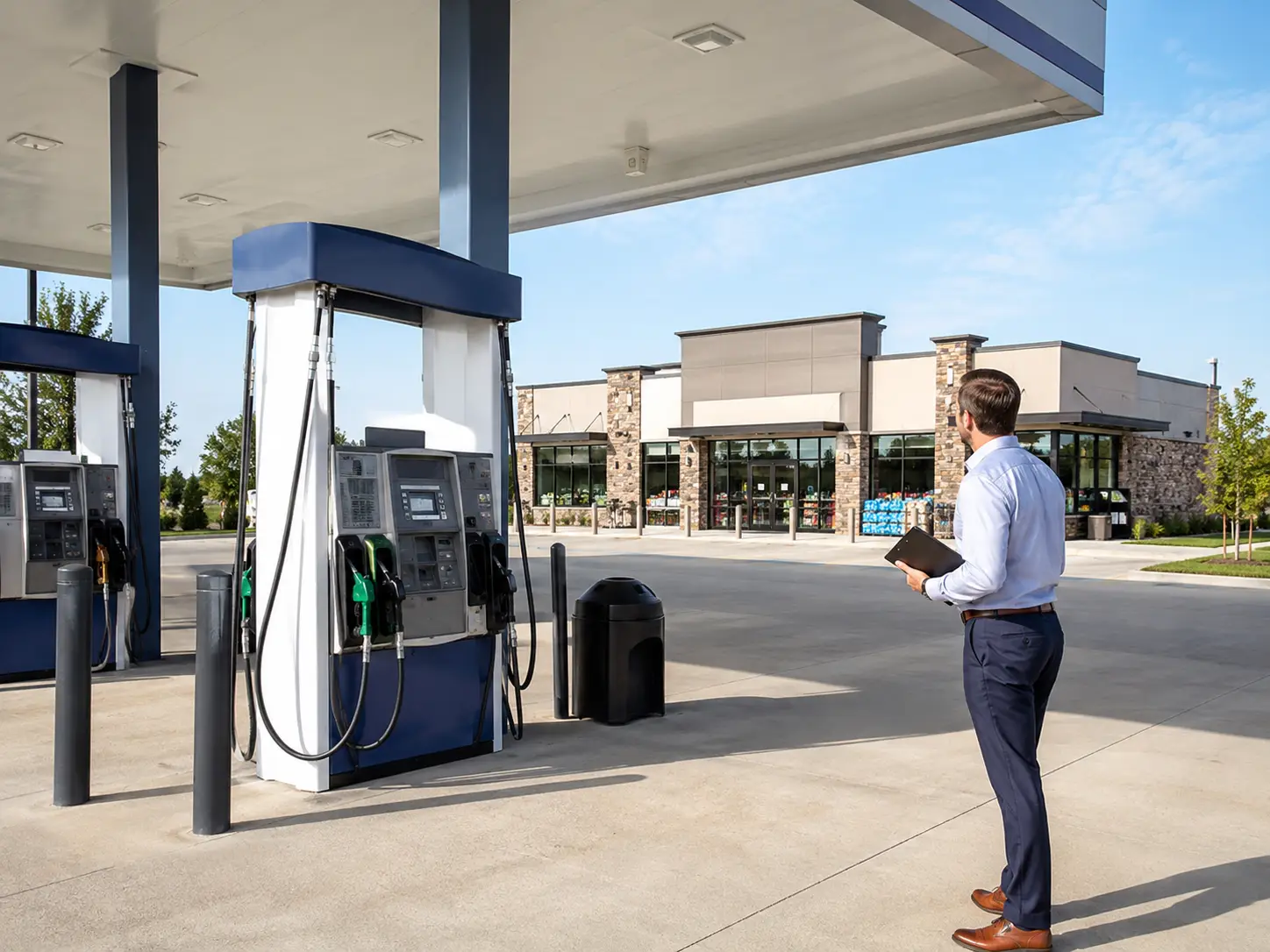
A gas station property may include land, buildings, fuel pumps, underground storage tanks, convenience store revenue, tenant leases, fuel supply agreements, environmental reports, equipment, and business cash flow. Because of these moving parts, borrowers often need help organizing the loan file before a lender or private investor can review the opportunity.
This page explains how gas station financing may be reviewed for acquisitions, c-store financing, fuel station financing, refinance loans, cash-out requests, value-add projects, owner-operator properties, investor-owned gas station real estate, multi-location portfolios, and bridge loans tied to time-sensitive purchases or repositioning. Loan availability depends on underwriting, collateral, environmental due diligence, state eligibility, and lender/investor guidelines.
Who This Page Is For
This resource is designed for real estate investors, gas station operators, c-store owners, commercial property owners, developers, brokers, foreign national investors, and business-purpose borrowers seeking private real estate financing in the United States.
It may be useful when a borrower needs financing for a hard money loan, bridge loan, gas station acquisition loan, convenience store refinance, fuel station value-add project, or commercial real estate loan secured by a gas station or c-store property.
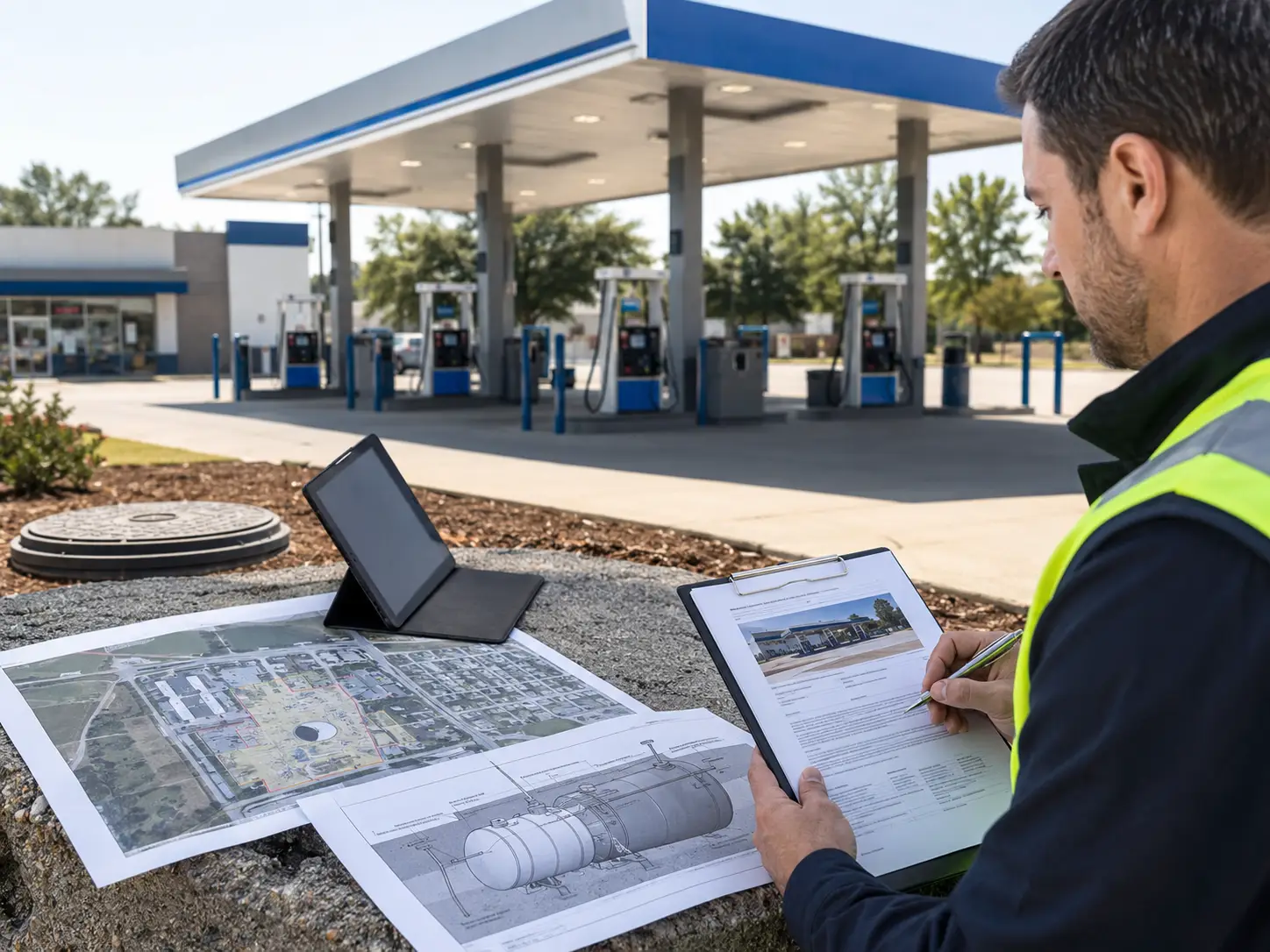
Environmental review note: Gas station financing may require environmental due diligence, Phase I reports, underground storage tank records, fuel contracts, operating statements, and property condition details. Eligibility still depends on underwriting, collateral review, borrower qualification, state eligibility, and lender/investor guidelines.

What Lenders Usually Review
Private lending review for gas station financing usually considers collateral value, environmental due diligence, Phase I reports, tank records, operating statements, fuel contracts, borrower liquidity, title condition, property condition, loan-to-value, loan purpose, and exit strategy. Requirements vary by property, state, borrower profile, and lender/investor guidelines.
What Can Delay Review
Common delays include missing environmental reports, unclear tank records, incomplete operating statements, unsupported property value, title issues, missing entity documents, unclear fuel supply agreements, weak proof of funds, or no defined exit strategy. Complete information can help the file be reviewed more clearly, but does not guarantee approval or funding.
DOCUMENTS COMMONLY REQUESTED
BORROWER INFORMATION
- Borrower legal name, contact information, and borrowing entity
- Entity documents, ownership structure, EIN, and authorization to borrow
- Government ID, credit profile, liquidity, and proof of funds
- Gas station, c-store, retail, or commercial real estate operating experience
PROPERTY INFORMATION
- Property address, lot size, building size, pumps, canopy, and store details
- Purchase agreement, payoff statement, title report, insurance, and photos
- Appraisal, BPO, comparable sales, property condition, and valuation support
- Phase I report, tank records, environmental history, and compliance items
LOAN SCENARIO
- Requested loan amount, lien position, purchase/refinance purpose, and use of funds
- Operating statements, fuel gallon reports, inside sales, rent roll, and leases
- Fuel supply contract, franchise agreement, equipment list, and business records
- Exit strategy, repayment plan, desired term, and target closing timeline
Environmental and regulatory note: For gas station and fuel station properties, borrowers should confirm whether environmental reports, tank records, state regulatory records, remediation history, or fuel system compliance documents are available. The U.S. Environmental Protection Agency underground storage tank resources may provide general education. Loan review remains subject to underwriting, collateral review, state eligibility, and lender/investor guidelines.
GAS STATION FINANCING REVIEW PROCESS
A clear submission helps Direct Private Capital Group, Inc. review whether available private lending options may fit the borrower, collateral, environmental due diligence, operating history, state, loan purpose, and lender/investor guidelines.
FROM SCENARIO SUBMISSION TO FUNDING CONSIDERATION
Preliminary review of borrower, collateral, loan purpose, environmental items, and equity position
Submit requested documents for underwriting, collateral review, operating review, and environmental review
Closing conditions, title, insurance, environmental due diligence, and funding consideration
Why Gas Station Financing Matters for Real Estate Investors
Gas stations and convenience stores can be attractive commercial real estate investments because they may combine real estate, fuel sales, inside sales, tenant income, and operating business revenue. They also require careful underwriting because the collateral may include fuel systems, underground storage tanks, environmental records, operating history, equipment, leases, and business performance.
A lender may review more than the property address and estimated value. The review may include fuel volume, store sales, profit and loss statements, tank compliance, environmental reports, lease structure, title, insurance, borrower liquidity, and the borrower’s operating experience.
For investors, the strength of the loan scenario depends on more than the purchase price. A stronger submission usually explains what the borrower is buying or refinancing, how the property currently performs, what environmental reports are available, whether the borrower has operating experience, and how the borrower plans to repay or refinance the loan.
What Gas Station Financing Does and Does Not Mean
Gas station financing may include private lending review for acquisitions, refinances, bridge loans, cash-out requests, c-store financing, and value-add projects. It does not mean every gas station property or borrower will qualify.
It May Be Used For
- Gas station acquisitions
- Convenience store and c-store financing
- Fuel station refinance loans
- Bridge loans for short-term payoff or purchase needs
- Cash-out refinance requests
- Value-add or renovation projects
- Multi-location portfolio review
- Investor-owned or owner-operated gas station real estate
It Does Not Mean
- No underwriting
- No environmental review
- No title review
- No valuation review
- No borrower review
- No document requirements
- Guaranteed approval
- Guaranteed funding
- Guaranteed rate or term
- Eligibility for every property in every state
Key Requirements, Documents, and Review Factors
Borrower Information Usually Reviewed
- Borrower name and contact information
- Borrowing entity name and entity documents
- Government-issued identification
- Credit profile, when required
- Real estate schedule owned
- Borrower liquidity and proof of funds
- Resume or experience operating gas stations, convenience stores, retail, or commercial real estate
- Personal financial statement, when required
- Foreign national documentation, when applicable
Property Information Usually Reviewed
- Property address, property type, lot size, and building size
- Number of pumps, canopy condition, and convenience store square footage
- Underground storage tank information and compliance records
- Current occupancy or operator status
- Purchase contract or refinance payoff
- Property photos, appraisal, BPO, or valuation support
- Title report, insurance information, and property condition details
- Environmental reports, including Phase I Environmental Site Assessment when available
Operating and Business Information Usually Reviewed
- Trailing 12-month profit and loss statement
- Year-to-date profit and loss statement
- Monthly fuel gallon reports
- Inside store sales reports
- Lottery, tobacco, food, or other store sales categories, when available
- Rent roll and lease agreements, if tenant-occupied
- Fuel supply contract and franchise agreement, if applicable
- Equipment list and business bank statements, when required
Exit Strategy or Repayment Plan
A private gas station loan often needs a clear exit strategy. Examples may include refinancing into bank financing after acquisition, refinancing into longer-term commercial real estate debt, selling the property after value-add improvements, paying down the loan from business cash flow, or completing a portfolio refinance after stabilization.
Loan Review Factors Table
| Review Factor | Why It Matters | What Borrowers Should Prepare |
|---|---|---|
| Collateral value | Helps estimate loan-to-value and collateral support | Appraisal, BPO, purchase price, sales comps, photos |
| Environmental review | Gas stations may carry fuel-related environmental risk | Phase I report, tank records, remediation history, regulatory records |
| Operating performance | Shows whether the business can support the plan | T12 P&L, YTD P&L, fuel gallons, inside sales |
| Borrower experience | Operators may need experience managing fuel and retail operations | Resume, prior ownership, management history |
| Liquidity | Shows ability to close, operate, and handle reserves | Bank statements, proof of funds, financial statement |
| Title and liens | Confirms ownership, payoff needs, and lien position | Title report, payoff statements, UCC filings |
| Loan purpose | Helps match the request to the right financing structure | Acquisition, refinance, cash-out, renovation, bridge summary |
| Exit strategy | Shows how the loan may be repaid | Refinance, sale, stabilization, or business cash flow plan |
Helpful environmental education note: Borrowers researching underground storage tanks and fuel system compliance may review general information from the U.S. Environmental Protection Agency. Private loan review still depends on the property, collateral, environmental due diligence, valuation, borrower profile, state eligibility, and lender/investor guidelines.
Common Reasons a Gas Station Loan File Gets Delayed
- Missing Phase I Environmental Site Assessment
- No tank records or incomplete underground storage tank documentation
- Unclear fuel supply agreement
- Missing trailing 12-month operating statements
- No year-to-date profit and loss statement
- Purchase contract not fully signed
- Borrower liquidity not documented
- Title report showing unresolved liens or ownership issues
- Property value not supported
- No clear exit strategy
- Missing entity documents
- Unclear distinction between real estate value and business value
How to Prepare Before Submitting a Gas Station Loan Scenario
Prepare a Short Loan Summary
- Property address
- Loan amount requested
- Loan purpose
- Purchase price or refinance payoff
- Estimated property value
- Borrower cash contribution
- Desired closing timeline
- Exit strategy
Provide Environmental Information Early
- Phase I Environmental Site Assessment
- Tank registration or compliance records
- Prior environmental reports
- Remediation documentation
- Spill or release history, if applicable
- Regulatory correspondence, if applicable
Organize Operating Statements
- T12 profit and loss statement
- Year-to-date profit and loss statement
- Monthly fuel gallon reports
- Inside store sales reports
- Lease agreements, if tenant-occupied
- Fuel supply contract
Related Financing Topics
Gas station financing may connect to commercial property loans, required documents, and the loan process.
What This Page Does Not Guarantee
This page is educational. It does not guarantee loan approval, funding, terms, rates, closing timelines, search rankings, AI recommendations, or loan availability. Direct Private Capital Group, Inc. does not represent that every gas station, convenience store, fuel station, or borrower will qualify for financing.
Loan availability may depend on borrower qualifications, credit profile, liquidity, collateral value, environmental due diligence, property type, loan purpose, loan amount, lien position, title condition, insurance availability, state eligibility, exit strategy, lender and investor guidelines, and applicable federal and state laws.
Compliance Disclaimer
Direct Private Capital Group, Inc. provides business-purpose real estate financing information. This page is for informational purposes only and is not a commitment to lend, loan approval, or guarantee of terms. All loans are subject to underwriting, borrower qualification, collateral review, valuation, state eligibility, lender/investor guidelines, and applicable federal and state laws.
Helpful Environmental Resource
Borrowers may review general public information from the U.S. Environmental Protection Agency underground storage tank resources and business planning resources from the U.S. Small Business Administration. Direct Private Capital Group, Inc. provides business-purpose real estate financing information, and this page is not environmental, legal, tax, or consumer mortgage advice.Frequently Asked Questions About Gas Station Financing
Gas station financing is business-purpose financing used for fuel stations, convenience stores, c-stores, acquisition loans, refinance loans, bridge loans, and value-add projects. Review may include real estate value, business operations, environmental due diligence, borrower qualifications, and exit strategy.
Private lenders may review gas station acquisition loans when the borrower provides a clear purchase contract, property details, operating statements, environmental information, borrower background, proof of funds, and exit strategy. Approval, terms, and funding are subject to underwriting.
Common documents may include a loan summary, purchase agreement or payoff statement, property photos, appraisal or valuation support, Phase I report, tank records, operating statements, fuel volume reports, inside sales reports, borrower ID, entity documents, proof of funds, and exit strategy.
Gas stations may involve underground storage tanks, fuel systems, prior spills, remediation history, and regulatory records. A Phase I Environmental Site Assessment and tank documentation may help lenders evaluate environmental risk before considering financing.
A borrower may request a gas station refinance loan to pay off existing debt, access cash-out, restructure short-term debt, or transition into a different financing structure. The review may include value, operating history, title, payoffs, environmental records, and borrower qualifications.
Operating statements are often important for gas station and c-store financing. Lenders may request trailing 12-month profit and loss statements, year-to-date financials, fuel gallons, inside sales, leases, and fuel contracts to understand property and business performance.
Foreign national investors may submit gas station financing scenarios for review. Required documentation, eligibility, structure, and loan options vary by borrower profile, entity structure, collateral, state requirements, and lender/investor guidelines.
Common delays include missing environmental reports, unclear tank records, incomplete operating statements, unsupported valuation, title issues, missing entity documents, unclear fuel contracts, weak proof of funds, or no defined exit strategy.
Direct Private Capital Group, Inc. reviews scenarios for qualified business-purpose borrowers across eligible U.S. markets. State eligibility varies by loan program, property type, borrower profile, loan purpose, and lender/investor requirements.
No. Submitting a scenario is not a commitment to lend, loan approval, or guarantee of terms. All loans are subject to underwriting, borrower qualification, collateral review, valuation, state eligibility, and lender/investor guidelines.